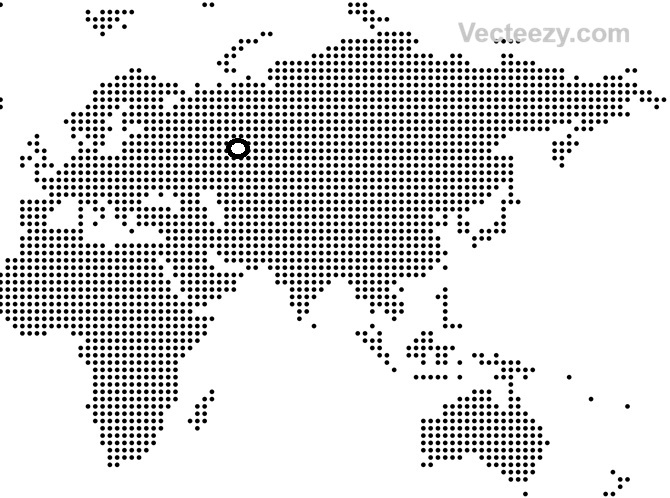
Ural is a range of relatively low mountains separating Europe and Asia. This area famous for various ores and metallurgical industry has deep research traditions. Two cities at Ural are well known in respect to electrochemistry: Yekaterinburg (Sverdlovsk during soviet period), which is Ural capital, and Perm’ located approximately 350 km northwest of Yekaterinburg.
Ivan Grigorievich Shcherbakov (1891-1953)
Vladimir Karlovich Pershke (1892-1939), graduate of Moscow University, worked at Ural in 1920-1933, and initiated teaching physical chemistry and corresponding research. During the last decade of his life, at Ural an later in Moscow, he moved to corrosion research. In particular, he worked on corrosion stability of equipment used for the production of organic substances, in particular, dyes. Obituary from Uspekhi Khimii. 1940. V. 9. P. 319-320, in Russian.
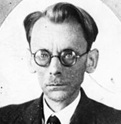
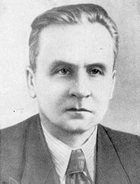
Oleg Alekseyevich Esin (1904-1979) graduated from Ural Polytechnical Institute (Ekaterinburg) in 1925, and spent all his life in this Institute. He was a reliable associate of Frumkin school, despite he never belonged to it directly, but developed a relative approach for the electrode kinetics of ions discharge. Here is his early review “Modern theories of the overvoltage”, Uspekhi Khimii. 1933. V. 2. P. 493-516 (in Russian) supporting slow discharge theory. He also made a lot in the field of melt electrochemistry, which became the most known electrochemical direction at Ural later. After WWII, Esin moved to physical chemistry of metallurgical processes.
Aron Iosifovich Levin (1908-1999)
Boris Fedorovich Markov (1912-1996) was Esin’s PhD student. During WWII, he was in the army, and then moved to Kiev, where he worked in the Institute of Inorganic and General Chemistry of Ukrainian Academy of Sciences in 1946-1986. He is known for his studies of melt electrochemistry and melt equilibria, specially in respect to titanium deposition from melts. Biographic data in Ukrainian are available.
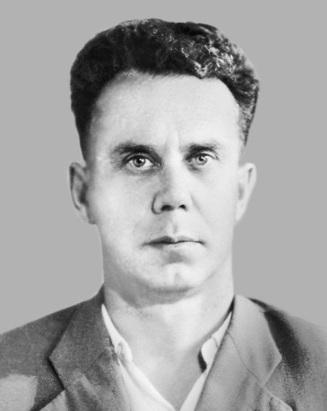
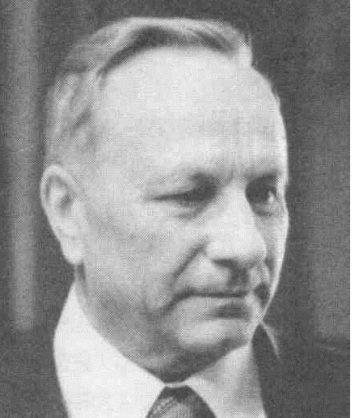
Vasilyi Aleksandrovich Kuznetsov (1918-1990) accumulated traditions of Fedotiev and Frumkin school, as he graduated from Leningrad Technological Inst (ЛТИ) in 1940 and completed PhD thesis (1946) in Moscow University under supervision of Z.A. Iofa.
The Institute of High Temperature Electrochemistry in Ekaterinburg <Sverdlovsk> was founded in 1957, simultaneously with Frumkin Institute. Its basis was active melt electrochemistry in Ural region. In parallel, the studies of solid electrolytes were started. Organizer and the first director was Mikhail Vladimirovich Smirnov (1918-1998). Institute web presents some historical information in English <available in July 2026>.
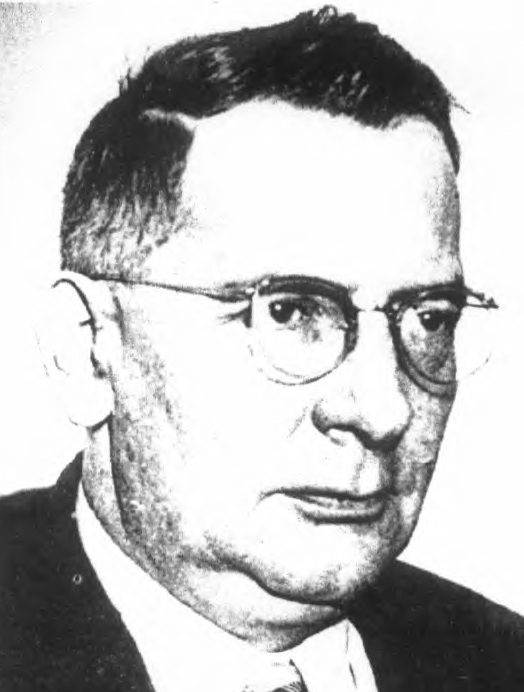
Sergey Vasilievich Karpachev (1906-1987) headed the Institute in 1963-1977, and served as the rector of Ural Univ in preceding period.
Aleksey Nikolaevich Baraboshkin (1925-1995)
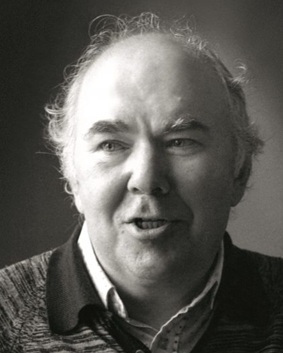
Vladimir Aleksandrovich Isayev (1951-2023) was a phisicist involved in electrocrystallization research.
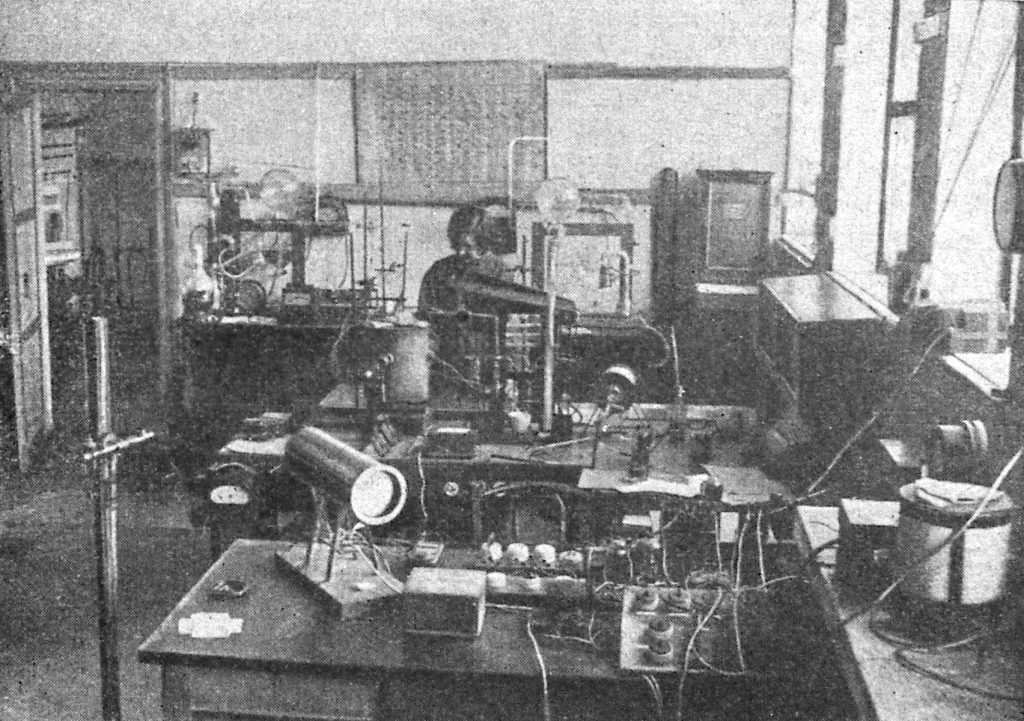
A number of historical texts (in Russian) from local journal can be of interest: Karpachev’s century, Esin’s century, and the memories of Anna Aleksandrovna Tager (1912-1999), polymer expert, who mentions many electrochemists of her period. A photo from Zhurnal Prikladnoi Khimii 1941 shows Ural electrochemical lab operating under Karpachev’s supervision and working on the basics of melt electrochemistry, as well as on metals dissolution in molten salts and magnesium fabrication by electrolysis.
PERM
Alekseyev obituary in Zhurnal Prikladnoi Khimii. 1935. V. 8. P. 186-188.