UNDER CONSTRUCTION
A growth point of applied electrochemistry in Moscow was Moscow Commercial Institute (later Plekhanov Inst), where Nikolay Aleksandrovich Shilov (1872-1930) and Nikolay Alekseyevich Izgaryshev (1884-1956) trained an entire generation of people with background in physical chemistry starting from 1910s. A strong galvanics/corrosion branch appeared later in the Moscow Institute of Non-Ferrous metals and Gold (arranged in 1930 on the basis of corresponding faculty of the Moscow Mining Academy). This Institute was moved to Krasnoyarsk (Siberia) in 1958, and belongs to local University (Siberian Federal Univ) nowadays. One of key persons was Sergey Andreyevich Pletnev (1901-1946), expert in galvanics and electrometallurgy (the link goes to obituary in Uspekhi Khimii. 1946. V. 15. P. 231-232).
Moscow Chemical-Technological Institute (МХТИ) named after Mendeleyev became a notable electrochemical place after WWII. Currently it is transformed into Russia Chemical-Technological University (РХТУ). Izgaryshev moved to this institute in 1944 to head the chair of electrochemical engineering, which is now dissolved in the chair of inorganic technologies.
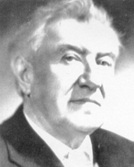
The chair of electrochemical engineering was founded in 1933 and headed up to 1941 by absolutely unique person rarely recognized as electrochemist, Pavel Mitrofanovich Luk’yanov (1889-1975).
Nikolay Tikhonovich Kudryavtsev (1901-1979) Here is 1979 obituary, and the article didicated to his centenary, authored by Yu.M. Polukarov
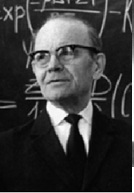
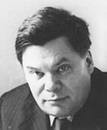
Mikhail Yakovlevich Fioshin (1927-1985)
Organic electrochemistry research was rather active in Moscow for several decades.
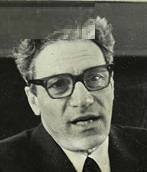
Stal’ Grigorievich Mairanovskyi (1926-1991) was an expert in organic polarography, who graduated from the Institute of Fine Chemical Technology in 1948 as organic chemist, and started with M.B. Neiman in 1949, combining PhD research with the work at the pharmaceutical plant. His 1953 PhD thesis included the studies of catalytic hydrogen evolution, a topic which he developed later for many years. His permanent place starting from 1956 was the Institute of Organic Chemistry.
Vladimir Anushavanovich Petrosyan (1939-2021) worked initially with S.G. Mairanovskyi, and remained a key electrochemist in the Institute of Organic Chemistry for many years, with essential shift to electrosynthesis.
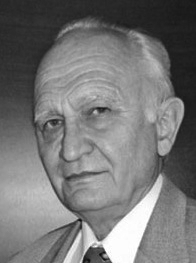
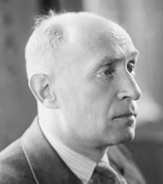
Hydroelectrometallurgy branch was arranged by David Mikhailovich Chizhikov (1895-1974). He was 1924 graduate of the Mining Academy, and teached in the Institute of Non-Ferrous metals and Golg before WWII. In 1939, he joined newly established Institute of Metallurgy (ИМЕТ), where headed division of physical chemistry of non-ferrous and rare metals. His collaborators most close to electrolytic technologies were Zoya Feodosievna Gulyanitskaya and N.A. Gurovich. B.Z. Ustinskyi was Frumkin school graduate who joined this division.
Boris <Borukh> Yakovlevich Kaplan (1922-2017), soldiers of WWII and 1949 graduate of Moscow University, was an expert in polarography. He worked first in the chemical lab of the Geological Authority, and then in the Institute of Rare-Earth Industry (ГИРЕДМЕТ) during 1960-1992, developing various versions of ac electroanalytical techniques and amalgam polarography. He authored the monographs on pulsed polarography (1978), on ac voltammetry (1984), and on metrology of analysis in non-ferrous metallurgy (1984, 1989). In 1992, he left for Israel. This obituary (in Russian) is published by his colleagues from Israel, Russia, and Moldova. Few articles can be found at our polarographic page, published in 1957 (review), 1962, 1964.
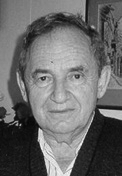
Semen Borisovich Tsfasman (1916-1963) was an expert in automation, who started as a lineman in 1933, and then graduated from Moscow Power Engineering Institute (МЭИ) in 1941. After four years at the fronts of WWII, he became a head of test instruments and automation department at so-named “Mayak” plant in Chelyabinsk region (Ural). In 1953 he was dismissed from this strongly secured huge plant built to produce various isotops for soviet nuclear program. This dismissal induced a lot of complications and living problems for him, and finally he was affiliated with applied metallurgical institutions in Moscow, and started with equipment for polarography. His contribution to this field can be hardly overestimated, as well as his book “Electronic polarographs” (1960). His selected publications can be found at our polarographic page.
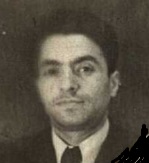
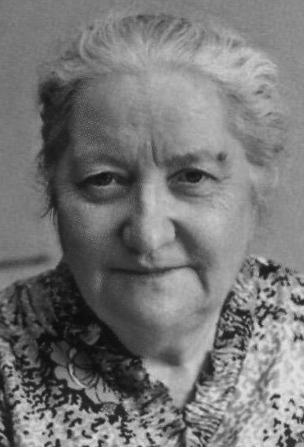
Rashida Mukhammed-Fatikhovna Salikhdzhanova (1933-2012) started to work with S.B. Tsfasman during his last years, after her graduation from Moscow Power Institute in 1960. She continued to develop the equipment for electrochemical analysis in Central Automation Lab belonging to ferrous metallurgy industry, and later (1975) moved to the Institute of Radioengineering and Electronics belonging to the Russian Academy of Sciences. DSc 1983…. Books
A seperate electrochemical branch located at about 60 km from Moscow exists in Chernogolovka scientific town.