Dnipro (the former Yekaterinoslav, then Dnepropetrovsk) is a large industrial city hosting several technical universities,
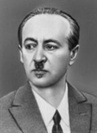
Lev Vladimirovich Pisarzhevskyi (1874-1938) was educated in Odessa, and started his research under supervision of Petr Grigorievich Melikishvili (Melikov) (1850-1927). The topic was related to inorganic peroxides, and included homogeneous reactions of peroxides in solutions. This resulted in appearance of various Pisarzhevskyi’s scientific directions, which are described in three subsequent texts in Uspekhi Khimii. 1948. V. 17, roughly specified as solutions (P. 506-508), electron in chemistry (P. 508-512) and catalysis (P. 512-515), in Russian. He subsequently worked in…. Tartu…. Tbilisi… See also in “History of developing catalysis in Ukraine (1850s-1980s)“. Here is an obituary in Zhurnal Obshchei Khimii. 1939. V. 9. P. 86-96, written by A.I. Brodskyi, with a list of 105 Pisarzhevskyi’s publications, and also the report about 1964 memorial conference dedicated to the progress in Pisarzhevskyi’s research directions.
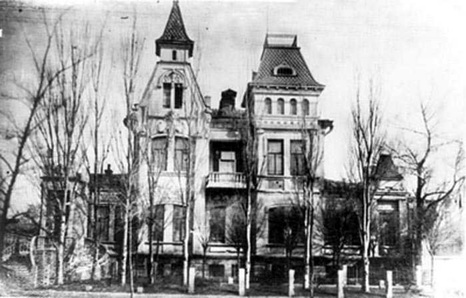
In 1927, on the basis of his Dept in the Mining University, he founded the Institute of Physical Chemistry (this photo shows the first Institute building in Dnipro). This institute was later accepted by the Ukrainian Academy of Sciences, named after Pisarzhevskyi. When WWII started, the institute was evacuated to Ufa (Bashkortostan), and moved from Ufa to Kiev in 1944.
Aleksandr Il’ich Brodskyi (1895-1969) was initially educated in Yekaterinoslav, but moved to Moscow and graduated from Moscow University in 1922. He became Pisarzhevskyi’s pupil/collaborator, and later his successor as the Institute director, starting from 1939. During his early research period, Brodskyi mostly studied electrolyte solutions and electromotive force of electrochemical cells. He pioneered application of optical techniques in solution research (Uspekhi Khimii. 1932. V. 1. P. 712-743, review in Russian). In 1930s, he was involved into completely new area of isotopes separation, see at the end of this page about his heavy water advancements.
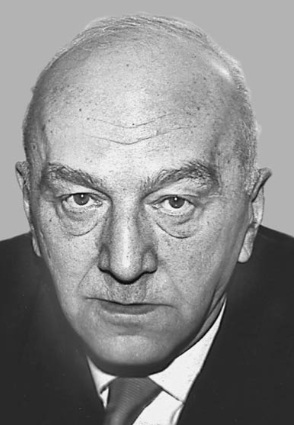
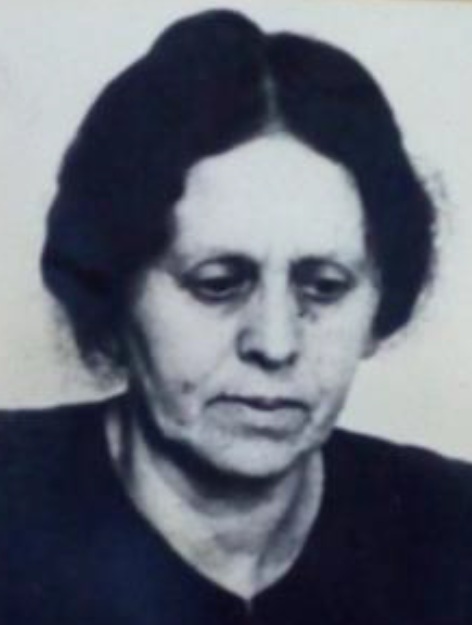
Mal’vina Assirovna Rozenberg (1888-1965) was Pisarzhevskyi’s collaborator and wife, who headed Inorganic chemistry Dept in Dnipro University in 1925-1941 and in 1944-1952, the link goes to biographic text in Ukrainian with abstract/captions in English. She also served as a Dean of Chemical faculty in late 1930s. Her memorial text about Pisarzhevskyi was published in Uspekhi Khimii. 1948. V. 17. P. 501-505, in Russian.
Aleksandr Mikhailovich Zan’ko (1885-1948), 1912 graduate of Polytechnical Institute in StPetersburg, was metallurgy-oriented analytical chemist. In Dnipro, he initially worked in the Mining Institute (up to 1930), then (up to 1933) in the University, and then in the Chemical-Technological Institute, serving as the Chailr of analytical chemistry Depts. During all this period, he was affiliated with the Institute of physical chemistry. He moved to Lviv in 1946. His electrochemical contributions are related to polarography and potentsiometry. <In some secondary sources, his initials are presented as A.N.>
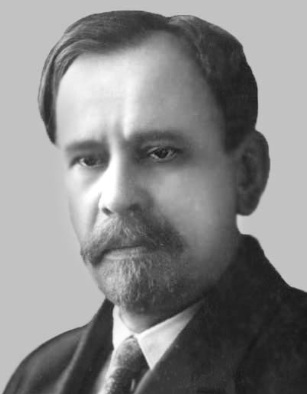
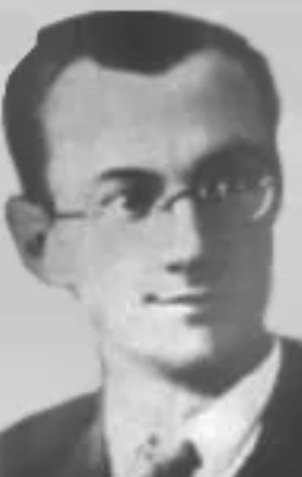
Vladimir Fedorovich Stefanovskyi (1902-1945) was the closest co-author of Zan’ko and his successor as the Chair of Dept in Dnepropetrovsk University.
Vladimir Solomonovich Finkel’shtein (1896-1937) started his education in StPetersburg <Petrograd>. After a complex period of army service and revolution, he moved to Kiev and graduated from Kiev Polytechnical Institute in 1919. His early research was supervised by V.A. Plotnikov. Starting from 1929, and up to his arrest and the violent death in 1937, he worked and teached in Dnipro. In particular, he headed the Dept of theoretical and applied electrochemistry in the Institute of physical chemistry. Recent (2018) text about V.S. Finkel’shtein is available in Ukrainian (abstract and captions in English), it contains a list of publications.
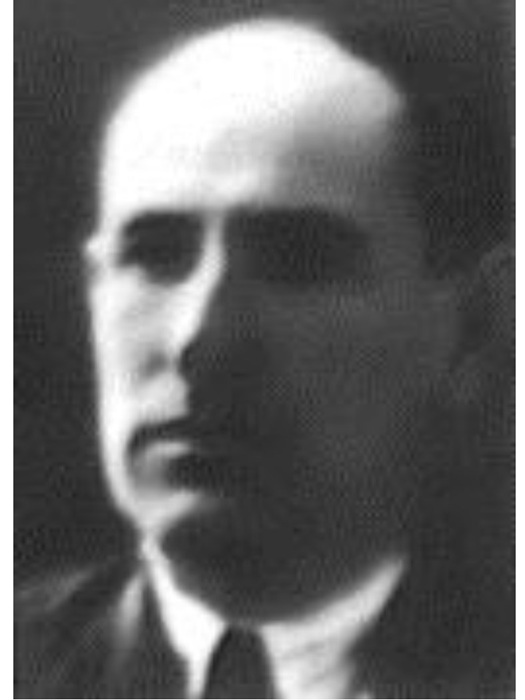
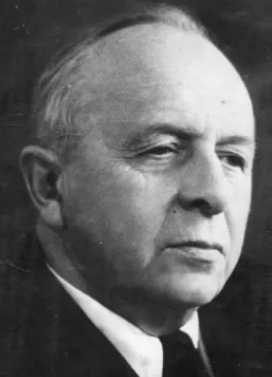
Vladimir Vel’gel’movich Stender (1897-1969) was a person with enormous background in applied electrochemistry, who graduated from Petrograd <StPetersburg> Polytechnical Institute in 1921. His active work in the field of applied electrolysis (including industry, Institute of Applied Chemistry, and two technical Universities) was interrupted in 1937 by the false allegation of spying, which resulted in expile to Kazakhstan. He started the Dept of non-ferrous metals electrometallurgy in Kazakh Mining and Metallurgical Institute in 1939. Here is an impressive report (in Russian) on the works of his Dept during WWII. He continued in Almaty, and later in Kemerovo (Sibiria) up to 1953, when he managed to move to Dnipro and headed the Dept of electrochemical technology in Dnipro Chemical-Technological Institute. To show an example of his text in English (translation of 1956 conference talk): Stender V.V. Electrolysis as a link between some metallurgical and chemical industries (some new processes of hydroelectrometallurgy) // In: Soviet Electrochemistry”. 1961. V. 3. P. 87-91.
Mikhail Aleksandrovich Loshkarev (1913-1986) His work in Dnipro was concentrated on adsorption on the electrodes and its effects on deposition/dissolution processes (a representative article can be found in Electrochim. Acta. 1964. V. 9. P. 1119-127).
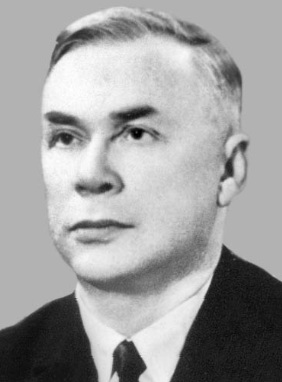
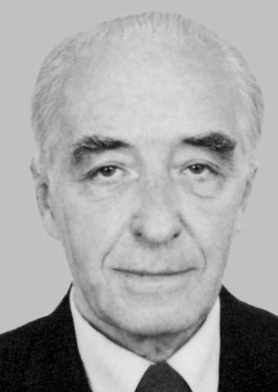
Октавиан Станиславович Ксенжек (1927-2019) started his work with V.V. Stender (1956 PhD thesis on porous graphite electrodes) and continued in Dnipro Chemical-Technological Institute during all his life, mostly dealing with microkinetics of electrode processes and porous electrodes. A number of his original articles available in English can be found below; basic article was published in Electrochim. Acta. 1964. V. 9. P. 629-637. He was Stender’s successor at the Dept of electrochemical technologies in 1970s. His late activities (surprizingly) were related to bioelectrochemistry and to a number of non-electrochemical fields (see in obituary published in the local journal Voprosy Khimii i Khimicheskoi Tekhnologii. 2019. No 3. P. 181-185, in Russian).
Ksenzhek O.S. Polarization of thin porous electrodes // Rus. J. Phys. Chem. 1962. V. 36. P. 331-333.
Ksenzhek O.S., Kalinovskui E.A., Koshel’ N.D. A laboratory electrolyzer for obtaining hydrogen // Industrial Laboratory. 1964. V. 30. P. 301-302. Russian version: Zavodskaya Laboratoriya 1964. V. 30. P. 237-238.
Ksenzhek O.S., Kalinovskui E.A. Oxidation of hydrogen on a porous nickel electrodes <Communication I>// J. Appl. Chem. USSR. 1964. V. 37. P. 548-552. Russian version: Zhurnal Prikladnoi Khimii. 1964. V. 37. P. 541-547.
Ksenzhek O.S., Kalinovskui E.A., Baskin E.L. The conductivity of electrolyte in porous nickel electrodes // J. Appl. Chem. USSR. 1964. V. 37. P. 1048-1054. Russian version: Zhurnal Prikladnoi Khimii. 1964. V. 37. P. 1045-1052.
Ksenzhek O.S., Kalinovskui E.A. Oxidation of hydrogen on a porous nickel electrodes <Communication II> // J. Appl. Chem. USSR. 1964. V. 37. P. 1258-1261. Russian version: Zhurnal Prikladnoi Khimii. 1964. V. 37. P. 1256-1260.
Ksenzhek O.S., Petrova S.A., Stender V.V. Electrolytic coating of the internal surface of porous materials // J. Appl. Chem. USSR. 1967. V. 40. P. 1890-1896. Russian version: Zhurnal Prikladnoi Khimii. 1967. V. 40. P. 1955-1962.
Important applied institution in Dnipro is the Institute of Pipe Industry [Tube Institute]. An example of electrochemical work from this metallurgical institution (electrolytic fabrication of metallographic speciments) can be found in Industrial Laboratory. 1962. V. 28. P. 935-937 (Zavodskaya Laboratoriya. 1962. V. 28. P. 883-885).
The photo shows 1934 electrolysis experiments for preparation of heavy water, arranged at Dnipro hydroelectric power plant. Natural water from Dnipro river was treated. Brodskyi continued to develop isotope separation techniques, including non-electrochemical, for both hydrogen and oxygen isotopes (here is his 1938 review), and later for other elements. He is known for quantitative consideration of ideal mixtures separation, which formed a basis for isotope technologies. Brodskyi’s fundamental book on the chemistry of isotopes was first published in 1952.
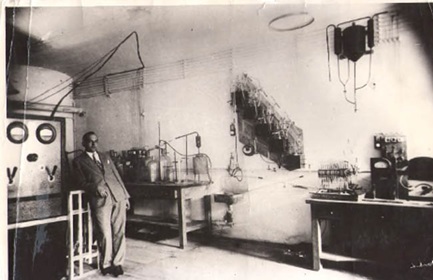
See also Aleksandrovich V.A., Shelud’ko M.K. The technology of heavy water production // Zhurnal Prikladnoi Khimii. 1940. V. 13. P. 483-498, in Russian, abstract in French (P. 498), with two photos of electrolyzers at the end of the file.