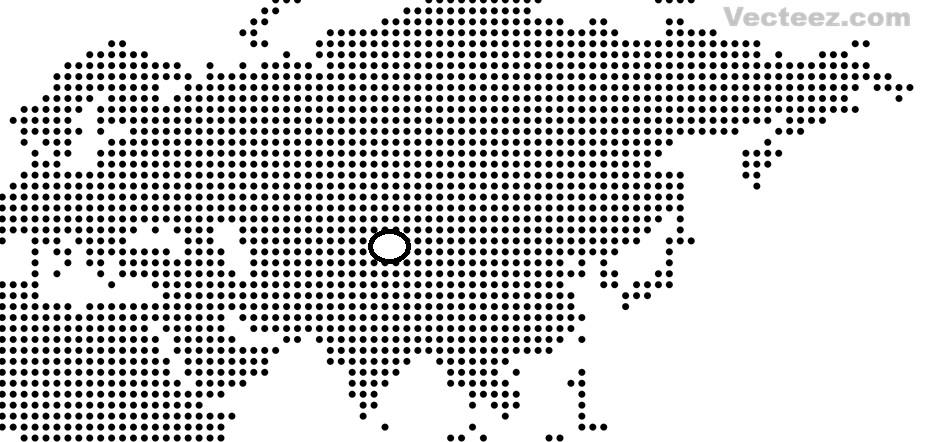
In Siberia, a huge Asian region of Russia, at least three electrochemistry locations can be found in Tomsk, Krasnoyarsk, and Novosibirsk. They all are close to each other in Siberian scale (800 km the longest), in the area shown schematically at the map. Like in case of neighbouring Kazakhstan, some scientists settled down in Siberia under duress, facing various repressions or social restrictions. However, another “mechanisms” existed as well, based on establishment of new research centers.
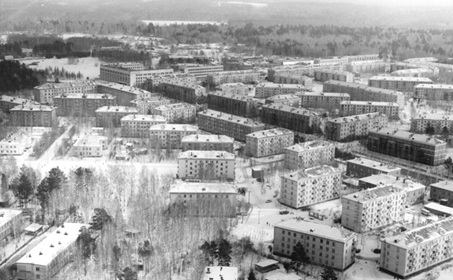
The most known example is “Akademgorodok” (academic town) near Novosibirsk started in 1958, with simultaneous establishment of Novosibirsk University. There are about 30 Institutes in this place, and some of them support electrochemical research.
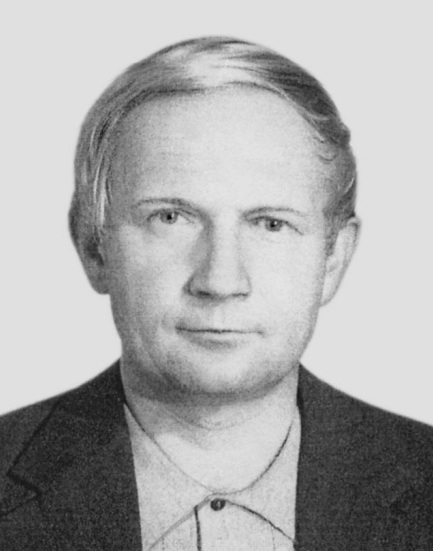
Robert Yul’evich Bek (1933-2012) graduated from Moscow Chemical-Technological Institute (МХТИ) in 1956 and completed his PhD (1961, Ag and Zn deposition) under supervision of N.T. Kudryavtsev; here is an example of their joint article. Then he moved to electrochemistry lab founded by N.P. Gnusin <who left for Krasnodar soon> in the Institute of Solid-State Chemistry and Mechanochemistry (ИХТТМ). His long Novosibirsk period resulted in extremely precise studied of electrodeposition of noble metals (1978 DSc thesis), and also in the development of the renewable solid electrodes. He was specially interested in the effects of adsorpton on initial steps of deposition, and spent a lot of efforts to arrange the studies of silver and gold interfacial features.
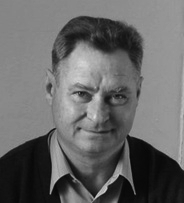
Aleksandr Ivanovich Maslyi (1941 – 2024) graduated from Novocherkassk Polytechnical Institute and started in Novosibirsk as PhD student (1967 PhD thesis on the uniformity of galvanic coatings). Peculiarities of current distribution along electrode surface in the course of electrolytic processes remained his major research direction later, when he concentrated on the porous electrodes (2002 DSc thesis). He was Bek’s successor as the head of electrocemistry lab, and authored a Chapter (in Russian) on the history of this lab in the book dedicated to 70th jubilee of the institute (2014). This Chapter contains many names of people, and also photos.
Some examples of interfacial electrochemistry from Novosibirsk (translated versions)
Gnusin N.P., Maslii A.I. Throwing power in the CuSO4*5H2O-H2SO4-H2O system // Protection of metals. 1966. V. 2. P. 460-463. Russian version: Zashchita Metallov. 1966. V. 2. P. 550-554.
Maslii A.I., Gnusin N.P. Uniformity of the distribution of thickness of coatings in the case of nonstationary systems of electrolysis. 1. Current reversal // Protection of metals. 1967. V. 3. P. 72-76. Russian version: Zashchita Metallov. 1967. V. 3. P. 96-101.
Maslii A.I., Poddubnyi N.P., Gnusin N.P. Modeling of plane electrical fields in electrolytes by means of inverted models // Protection of metals. 1969. V. 5. P. 303-305. Russian version: Zashchita Metallov. 1969. V. 5. P. 341-344.
Zelinskyi A.G., Bek R.Yu. Double-layer capacitance of polycrystalline silver // Sov. Electrochem. 1978. V. 14. P. 1583-1587. Russian version: Elektrokhimiya. 1978. V. 14. P. 1825-1829.
Zelinskyi A.G., Bek R.Yu. The estance and double-layer capacity of gold in sodium fluoride solutions // Sov. Electrochem. 1980. V. 16. P. 32-34. Russian version: Elektrokhimiya. 1980. V. 16. P. 39-41.
Rogozhnikov N.A., Bek R.Yu. Adsorption of cyanide ions on silver. The effect of adsorption on double-layer capacity and on the potential of zero charge // Sov. Electrochem. 1980. V. 16. P. 67-71. Russian version: Elektrokhimiya. 1980. V. 16. P. 76-79.
Abdulov S.D., Zelinskyi A.G., Bek R.Yu. Capacity of the renewable gold electrode in mixed sodium fluoride/sodium chloride solutions of constant ionic strength // Sov. Electrochem. 1980. V. 16. P. 559-563. Russian version: Elektrokhimiya. 1980. V. 16. P. 655-661.
Krasnoyarsk, ca. 800 km to the East from Novosibirsk, is located near Yenisey river, about 30 km from 125 m high Krasnoyarsk Dam, which provides electricity for Krasnoyarsk Aluminum Plant (КрАЗ). It was started in early 1960s, in parallel with electrometallurgical research and education in the city. In 1958, the Institute of non-ferrous metals and gold was transferred to Krasnoyarsk, and formed a basis for local applied electrochemistry. In addition to melt electrolysis, electrometallurgy of noble metals was an important direction during some period, because of involuntary work of R.L. Muller at the local plant.
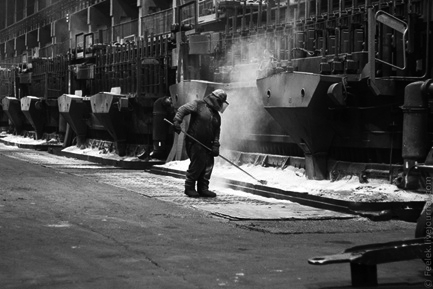
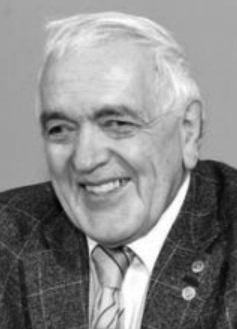
Petr Vassilievich Polyakov (b. 1935) graduated from metallurgical faculty of the Leningrad <StPetersburg> Polytechnical University in 1957, and was employed in Bereznyaki (Ural region) as an engineer. After several years of practical work on melt electrolysis, he became PhD student in his alma mater, and completed PhD thesis on initial steps of metals electrocrystallization in melts (1964). Starting from mid 1960s, he became a key electrolysis science person in Krasnoyarsk, where the vast majority of researchers in this field are his former students. He concentrated on dissipation phenomena in aluminum electrolysis. His 1980 DSc thesis mass and heat transfer in the course of melt electrolysis. He is widely recognized in international electrometallurgy.
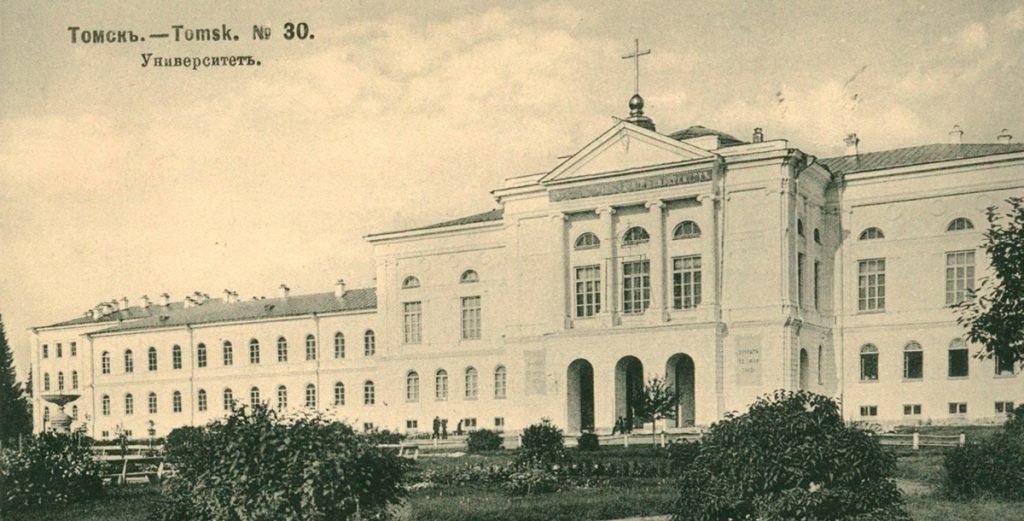
Tomsk is located at ca. 250 km from Novosibirsk, and hosts the eldest classical University in Siberia (started in 1878), and also the eldest Polytechnical University in this region (started in 1896). Electrochemistry in this place is noticed from Tomsk period of M.I. Usanovich in 1930s (mostly solution research), and then received a great development in the field of electroanalysis starting from 1960s.
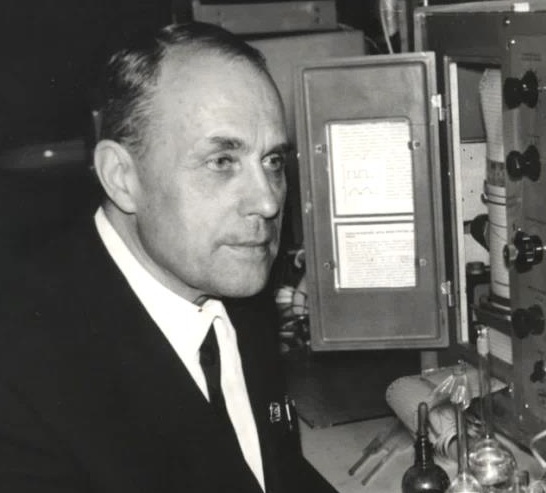
The founder of Tomsk electroanalytical school was Armin Genrikhovich Stromberg (1910-2004), who originated from Ekaterinburg (Ural), where he worked with S.V. Karpachev (1939 PhD thesis on the melts viscosity in respect to conductivity). During WWII, he was illegally sentenced to forced labor in a special camp for ethnic Germans in Nizhnii Tagil (Ural) for more than a year. This interrupted his enthusiastic work on the development of polarography, which was mostly concentrated on “amalgam polarography” (a sort of inversion voltammetry, 1951 DSc thesis). He moved to Tomsk in 1956, and established rapidly developing electroanalytical laboratory in Tomsk Polytechnical University in 1962. After retirement in 1985, he continued with research as well. Here are two historical Stromberg’s texts in Russian: about his lab in 1962-1985 and about his 50 years in polarography.