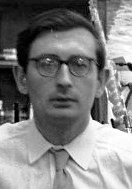
We have no doubts that early works of Frumkin school on electrolytes adsorption on charcoals pioneered the quantitative studies of perfectly polarizable electrodes: they served as the precursor for experiments on ionic adsorption on platinum group metals. At the same time, these early works had deep non-electrochemical roots related to adsorption of various species on carbon materials. These roots originated from a prominent N.A. Shilov’s school presented below, and partly also from G.L. Stadnikov’s experience. Going down in hystory, we should mention Johann Tobias Lowitz [Tovyi Egorovich Lovits] (1757-1804), who worked out the techniques to purify solutions with the help of dispersed charcoal. According to the article published in J. Chem. Education. 1945. V. 22. P. 149-151 (with original Lovits’s Refs), his research took place in Russia and was published in Crell’s Chemische Annalen in 1780s. There are also the articles in Russian in Uspekhi Khimii. 1952. V. 21. P. 508-512 and in Zhurnal Fizicheskoi Khimii. 1957. V. 31. P. 2766-2770 (in Russian). The latter article dedicated to Lovits’ bicentennial claims priority in respect to chemosorption concept. However, active development of the area started much later.
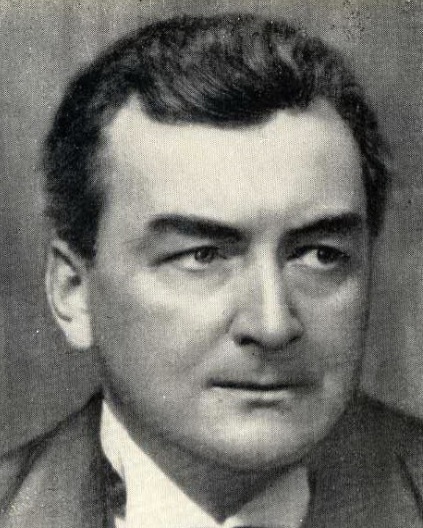
Development of adsorption school in Russia is due to a great contribution of Nikolay Aleksandrovich Shilov (1872-1930), who graduated from Moscow University in 1895 and collected research experience in Ostwald’s and some other German labs. Before WWI, Shilov’s favorite field was kinetics of reactions in solutions. He was close to his former supervisor, a well-known organic chemist N.D. Zelinskyi (1861-1953), and during WWI they both worked on development of carbon gas masks. Shilov operated the mobile laboratory, which collected the data on carbon in the mask after use at the front, and worked outthe techniques of carbon attestation for this application. This obituary (Zhurnal Fizicheskoi Khimii. 1931. V. 2. P. 213-232, in Russian) contains a list of articles. Later several informative articles dedicated to Shilov were published in Uspekhi Khimii. 1946. V. 15 (in Russian):
Biography and activities (B.M. Berkengeim, P. 233-238).
Shilov’s works on chemical kinetics (K.V. Astakhov, P. 239-245). Coupled redox reactions. Shilov’s works on photographic processes (Ya. M. Katushev, P. 246-248). Development processes in silver photography.
Shilov’s and Zelinskyi’s works on gas masks (M.M. Dubinin, P. 249-254). Activities on gas protection (M.V. Krasil’nikov, P. 255-259).
Shilov’s works on adsorption from solutions (L.K. Lepin’, P. 258-264).
Systematic text presenting scientifi biography of N.A. Shilov and listing his pupils is published in Zhurnal Fizicheskoi Khimii. 1955. V. 29. P. 1730-1735, in Russian.
Let us add later important note of E.A. Shilov (namesake, former student of E.I. Shpitalsky) on the relation of N.A. Shilov’s ideas to further developed concepts of homogeneous catalysis, Zhurnal Fizicheskoi Khimii. 1957. V. 30. P. 266, in Russian.
Mikhail Mikhailovich Dubinin (1901-1993) started as N.A. Shilov’s student in the Moscow Higher Technical School (МВТУ), and continued the work with his supervisor after graduation in 1921. His research style was also affected by his stay in Ostwald’s lab in early 1920s. During all his life, M.M. Dubinin studied the adsorption phenomena as a part of physical chemistry, addressing a wide range of adsorbates and adsorbents, as well as separation of substances in immiscible liquids and gels. In 1932, he joined newly formed Military Academy of Chemical Defence. After WWII, his lab of sorption processes was started in the Institute of Physical Chemistry. Here is rather informative jubilee text (1951, in Russian) written by Konstantin Vassilievich Chmutov (1902-1978), another person from Shilov’s school.
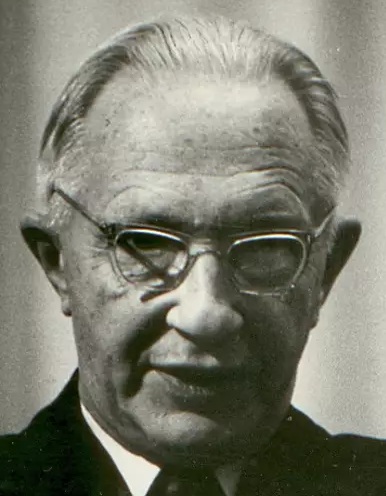
Dubinin M.M. Interfacial oxides and adsorption properties of active carbons // Uspekhi Khimii. 1955. V. 24. P. 513-526, in Russian.
There are many Dubinin’s workes available in international journals. The most known are from Chem. Rev. 1960. V. 60. P. 235-241; J. Coll. Interface Sci. 1967. V. 23. P. 487-499; J. Coll. Interface Sci. 1980. V. 75. P. 34-42 (with H.F. Stoeckli); Carbon. 1985. V. 23. P. 373-380; Carbon. 1989. V. 27. P. 457-467 (this list can be continued).
Andrey Vladimirovich Kiselev (1908-1984) was one of the last N.A. Shilov’s students in the Moscow Higher Technical School (МВТУ), he graduated in 1930. His major fields were adsorption thermodynamics and interfacial chemistry, and his favorite adsorbents were xerogels. This resulted from combination of adsorption and chromatography research in his lab in Moscow University, started in 1943. In 1965, he also became a head of the lab of surface chemistry in the Institute of Physical Chemistry. His widely known hobby was collection and restoration of various pieces of art. Here is a jubilee article from Zhurnal Fizicheskoi Khimii. 1959. V. 33. P. 740-741 (in Russian).
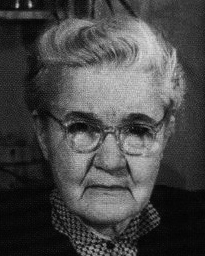
Lidiya Karlovna Lepin’ [Lidija Liepina] (1891-1985), a lady of Latvian origin, was educated in Moscow, where she managed to joint Higher Courses for Women. N.A. Shilov teached in this institution, and she was involved to his gas sorption research in 1916. She continued to work in Moscow up to the end of WWII, teaching in several places, and also being a head of colloid lab in the Military Academy of Chemical Defence. At the end of 1930s, being affiliated with Moscow University, she started corrosion research (the earliest article we found was published in 1938). Then she moved to Riga, where he main research field was just corrosion, and became very famous in scientific community of Latvia. Many details can be found in this memorial text.
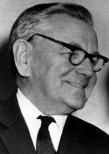
Konstantin Vasilievich Chmutov (1902-1979) was also supervised by N.A. Shilov in his youth. He graduated from the Moscow Higher Technical School in 1928. Here is the text dedicated to his 60th jubilee.
Aleksey Anfimovich Lopatkin (1930-2004) was 1953 graduate of Moscow University, who continued with thermodynamics of adsorption accented in A.V. Kiselev’s studies. Lopatkin’s main contribution is molecular-statistical approach to calculate thermodynamic characteristics. He had widely know publications in international journals, e.g., J. Chem. Soc. Faraday Trans. 2. 1978. V. 74. P. 367–379 and Zeolites. 1985. V. 5. P. 261-267.
His close friendly contacts with Frumkin school resulted in creation of collage, which imitates Frumkin’s portrait by Gauguin (but this is not his only picture).