Odessa is a city from UNESCO Lists of Cultural Heritage. Its history knows repeated destructions and reconstruction of numerous famous European style buildings, which are currently at everyday risk because of Russian agression. Odessa is a special city with deep international traditions, including scientific and cultural. This city

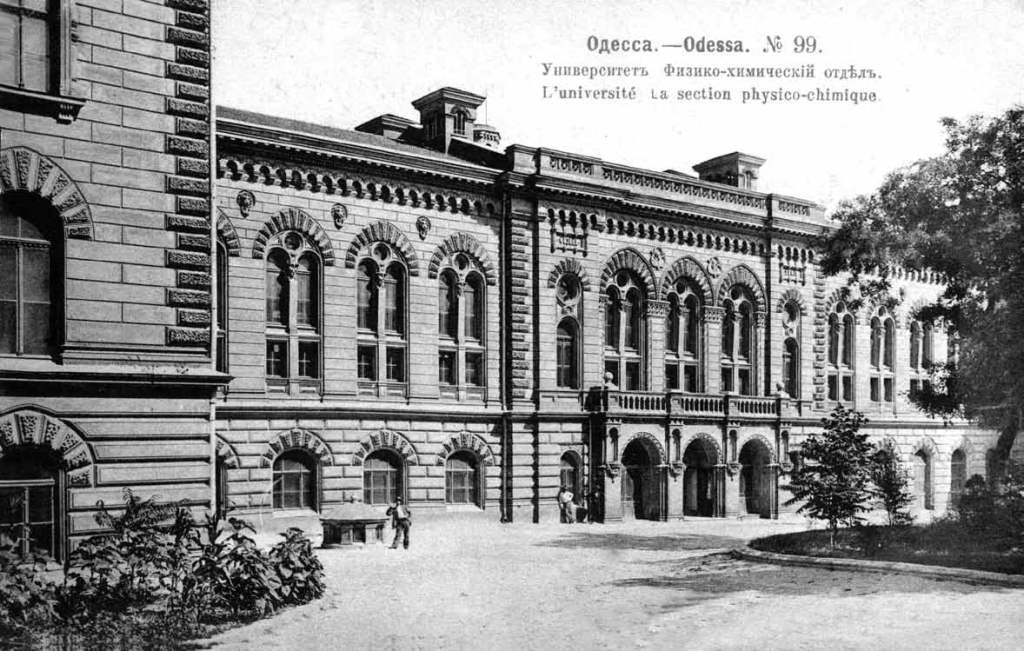
Novorossiysk University was the name of historical University in Odessa, founded in 1865, and then closed in 1920. This historical building (beginning of 1900s) belonged to physico-chemical division of Novorossiisk University. Currently existing Odessa University was started only in 1933. In 1920s and early 1930s, Technical….
Dmitrii Konstantinovich Dobroserdov (1876-1936) was educated in Kazan, where he worked for a long time, then moved to Kiev Polytechnical Institute, and continued in Odessa starting from 1923 <the link goes to 1938 obituary published by Dobroserdov’s closest collaborator V.A. Biber, in Russian>. He is most known for precise measurements of permittivity for numerous organic solvents, mixed and individual. In Odessa, he headed the Dept of inorganic chemistry. His inorganic field was the study of solid hydrates.
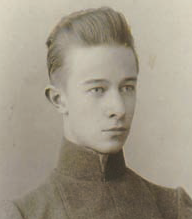
Aleksandr Nikolaevich Sakhanov [Alexander Nicholas Saсhanen] (1886-1976), 1909 graduate of Moscow University, started with I.A. Koblukov. In electrochemistry, he is most known for the studies of conductivity of non-aqueous solutions (1914 Magister thesis), which were continued in Odessa up to 1921. This work included parafаins research, and finally attracted Sakhanov’s attention to the problems of oil industry. Starting from 1922, when he moved to Groznyi (Chechen republic), he worked directly for oil analysis and conversion, and became the director of specialized institute in Groznyi founded in 1928. His oil studies of 1920s are described here (in Russian), numerous articles are published in specialized soviet oil journal (here is a list). In 1931, Sakhanov left for USA, and continued in New Jersey in the company currently known as Exxon Mobil. During this period, he is known as Saсhanen (he was of Finnish origin). He authored fundamental books Conversion of petroleum (1940) and The chemical constituents of petroleum (1945).
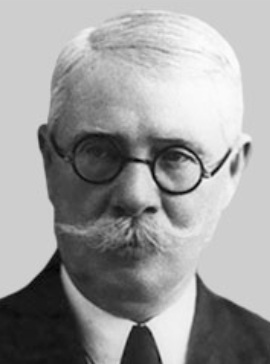
Pavel Nikolaevich Pavlov (1872-1953)
In 1930s, he worked on some problems of polarographic analysis.
Evgenyi Samoilovich Brukser (1887-1965) graduated from Novorossiisk University in 1909. During his student period, he spent some time in Paris (1905-1906), and visited the lectures of Marie Curie in Sorbonne. This attracted his attention to radioactive elements, and in 1910 he arranged radiological lab in Odessa (highly informative text in Ukrainian). In 1924, this lab was extended to radiological institute, which was transformed into Ukrainian division of the Institute of rare metals (ГИРЕДМЕТ) in 1932. In 1928, Balneological Institute was also established, which accepted medicine-oriented topics of radiological lab. Brukser considered polarography as a strong tool in respect to the search for rare metals in natural water and soils, and really initiated the development of polarography in the USSR. In particular, he arranged polarographic courses in 1936, which induced fast distribution of polarographic knowledge in the country. This trend was strongly supported by production of the first polarographic devices in his institute.
By these means, Odessa played the unique role in development of polarographic analysis in USSR. To understand geographic and topical scales of this development, see a list of selected polarographic articles.
We have a limited information about Efim Abramovich Kanevskyi. Before WWII he worked in Odessa division of the Institute of rare metals (ГИРЕДМЕТ), and was involved into polarography of rare metals (Zavodskaya Laboratoriya. 1940. V. 9. P. 283-287). His 1945 PhD thesis addressed polarographic determination of Nb and Ta. In 1946 he was sent to a ‘secret’ institution near Moscow as a head of analytical lab, and in 1955 became a head of pysico-chemical laboratory in the Institute of Chemical Technology (ВНИИХТ), which played the leading role in Russian atomic project. His most known contribution dubiously named ‘absolute potential’ belongs just to this period. He was active up to at least early 1980s, as one can judge from publications in Russian. In particular he completed two textbooks on thermodynamics published by Moscow Chemical-Technological Inst in 1981.
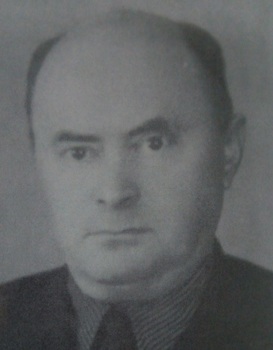
Boris Abramovich Rashkovan (1905-1977) was a graduate of Odessa Chemical-Pharmaceutical Institute (1930). He moved to Kharkiv for PhD and continued there up to mid 1950s, excluding WWII period of work in Kirgiziya. During 1954-1959, he worked in Vitebsk, Belarus, and then returned to Odessa. His early solution research was directed towards analytical techniques, and he mostly worked on chemical analysis later. His affiliations in all the places were medicine-related universities. In Odessa, he worked in the Institute of Food and Refridgeration Industry.