There are several “electrochemical places” in StPetersburg (SPb), which was a capital of Russia for a long time. Specialized Dept of Electrochemistry still exists at the Faculty of Chemistry, SPb University. There are also technical universities which host various branches of applied electrochemistry.
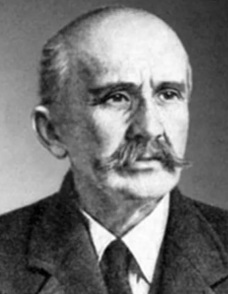
Mikhail Stepanovich Vrevskyi (1871-1929) was a key person of his period in <non-electrolyte> solutions research in SPb University. He continued with this topic as a former student of D.P. Konovalov (memorial article in Russian ). In 1914, Vrevskyi founded the Dept of physical chemistry, see Historical webpage of the Dept (in Russian). The obituary published in Zhurnal Prikladnoi Khimii. 1929. V. 2. P. I-VI (in Russian) was authored by K.P. Mishchenko. The memorial article with numerous details of Vrevskyi’s life and work, incl. list of publications, was published by his pupil S.A. Shchukarev in Zhurnal Obshchei Khimii. 1931. V. 1. P. 1145-1157 (in Russian).
Ivan Ivanovich Zhukov (1880-1949) headed Vrevskyi’s Dept starting from 1929, transformed it into Dept of physical and colloid chemistry, and finally separated his Dept of colloid chemistry in 1939. He payed serious attention to teaching of colloid chemistry, and authored a fundamental textbook which was used for decades. Among his research areas, the most known is electrodyalisys (Zhukov’s 1943 review in Uspekhi Khimii, in Russian). Jointly with Nikol’skyi, he worked on applied problem of water purification. He was active with pH-metry (examples are “antimony electrode” (1931) and pH-metry in mixed solvents (1932)) and, wider, in potentiometric analysis. He also invented unusual approach to fabricate smooth highly active platinum electrodes, Zhurnal Obshchei Khimii. 1933. V. 3. P. 958-962, and 1934. V. 4. P. 9-12.
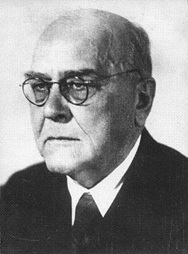
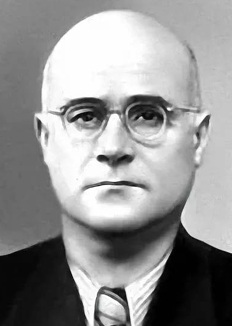
Boris Petrovich Nikolskyi (1900-1990) was supervised by M.S. Vrevskyi in his youth. His widely known early works on the glass electrode (Parts I – III) were mostly done in Saratov (Volga region), where Nikolsky was in exile after he was arrested in 1935. At the end of 1937, he was arrested again and sent to detention camp at the North. Fortunately, he was released in 1939 and returned to Leningrad. Part V appeared in Zhurnal Fizicheskoi Khimii 1953. V. 27. P. 724-743 (generalized theory, allowing for varios bonding energies of hydrogen ions). Part IX (co-authored by M.M. Shul’tz and N.V. Peshekhonova) appeared in 1959. V. 33. P. 1922-1927.
1932: Dept of Electrochemistry in newly established Institute of Chemical Physics, headed by S.A. Shchukarev, B.P. Nikolskyi, and R.L. Müller (see P. 448 of this text). However, this Institute was transferred to Moscow in few years, when electrochemical branch continued in various institutions in Leningrad.
Nikolsky B.P. Die Eigenschaften der doppelschicht und die Austauschadsorption von Ionen au Nichtmetal-Lischen Oberflachen // Phys. Z. Sowjetunion. 1933. Bd. 4. S. 266–281. Ions bonding and exchange at Al(OH)3 and kaolin surfaces is addressed.
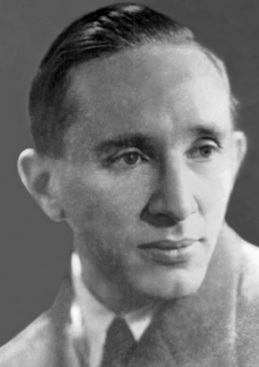
Konstantin Pavlovich Mishchenko (1901-1979) is another important person supervised by M.S. Vrevskyi at the early stage.
Yuryi Alekseyevich Boltunov (1903-1971) graduated from the University in 1930 and worked there on various potentiometric topics before WWII. After a period at the front, he started to work in essentially different area: printing for cinema, including color printing. He served as the director of some Moscow factory related to cinema and TV.
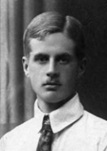
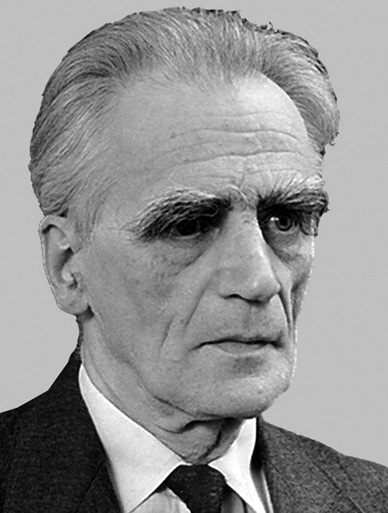
Aleksey Georgievich Morachevskyi (1923-2019) entered SPb University after WWII, several years at the front. In 1951, he completed diploma thesis on luminescent complexes of rare-earth metals (joint work with S.I.Vavilov’s lab). Then he became PhD student of A.V. Storonkin. His 1954 PhD thesis was devoted to thermodynamics of ternary liquid systems. Starting from 1960s, he continued the research of this type already at the Dept of physical chemistry, and became Nikol’skyi’s successor as a head of Dept in 1988.
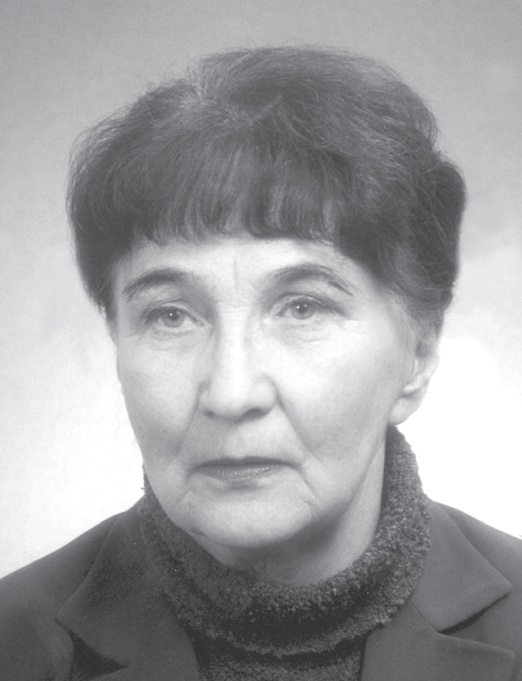
Natalia Aleksandrovna Smirnova (1933-2023) was a student of A.G. Morachevskyi, she headed the Dept of physical chemistry starting from 1997. She was an expert in thermodynamics of liquids and solutions, including solutions of gases. She is mostly known for applications of statistical thermodynamics to these systems. In 2005, she published a survey dedicated to 90 years jubilee of the Dept (in Russian), which contains all key names and representative publications for all research directions.
1940: Specialized Dept of Electrochemistry is founded at the Faculty of Chemistry, StPb (Leningrad) State University.
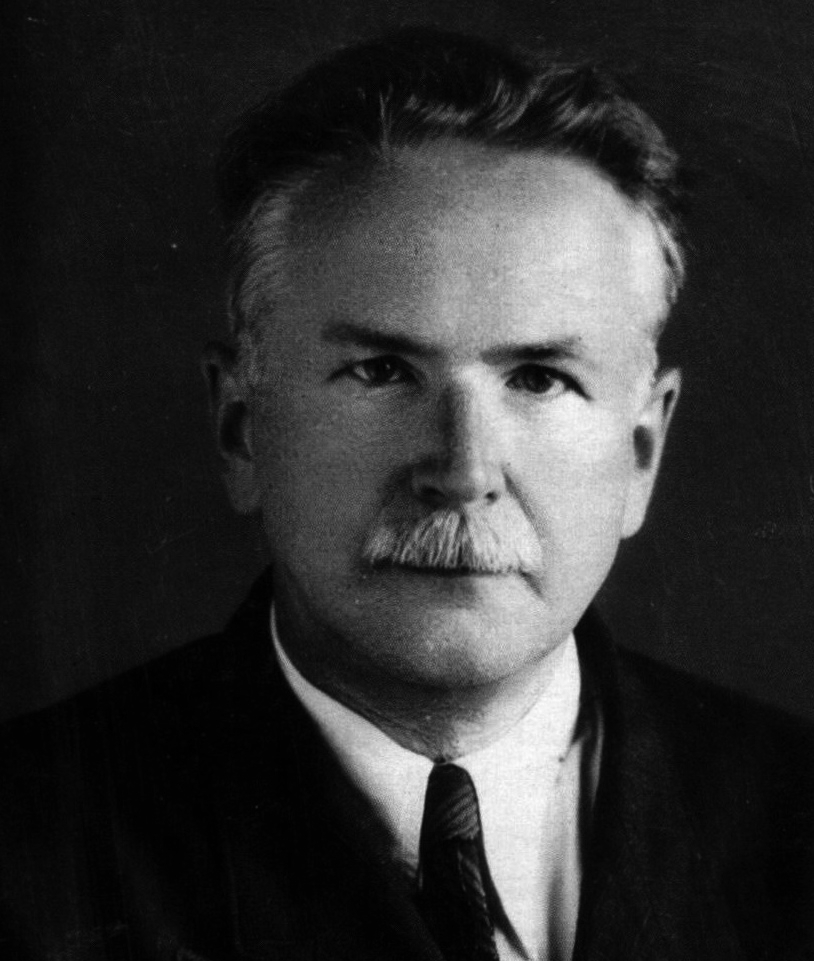
This Dept was headed first by Rudolf Lyudvigovich Müller (1899-1964), who was an expert in solid electrolytes with the accent on glass conductivity (1929 diploma study in StPb University, 1938 PhD degree, and 1940 DSc thesis). However, he was ungroundedly arrested in 1941 as a person having German last name, and found himself in various camps in Krasnoyarsk region (Siberia). In 1946, he was transferred to Karsnoyarsk and obliged to work in newly constructed factory, working out electrolysis technologies of platinum group metals and gold. Being released in 1951 (but still exciled), he moved to Kemerovo (also in Siberia) and worked as school teacher. In 1953, after Stalin’d death, he was allowed to work in the local Mining University, and returned to his research work with glasses, as well as with local carbon. He was able to come again to StPb only in 1956. Texts in Russian written by Andrey G. Morachevsky and by unknown author from Kemerovo present many biographic and professional details.
During WWII, Dept was frozen because of evacuation of the Unoversity (first to Elabuga (Tatarstan), and then to Saratov). After WWII, a long transition period took place, when B.P. Nikolskyi was a part-time head of the Dept. At the end of this period, at 1950-1951, Alexey Vasilievich Storonkin (1916-1994) played this role. He was a pupil of B.P. Nikolskyi, and later headed the Dept of solutions.
Yaroslav Vassilievich Durdin (1900-1980) became a head of the Dept in 1952. He started to work on fundamentals of metal dissolution before WWII, being a member of the Leningrad Institute of Chemical Physics. Then he worked in the inorganic chemistry lab in the University. His research of electrode processes in solutions of metal ions, including complex ions, determined the major topic of the Dept for several decades. He also supervised two successors, who headed the Dept sequentially during four decades after him.
1940s: Vol’f Lazarevich Kheifets (1904? – 1977) started to work at the Dept of Electrochemistry in 1946, after 1952 he mostly worked in GiproNickel applied institute, and is known as an expert in Ni plating and refining.
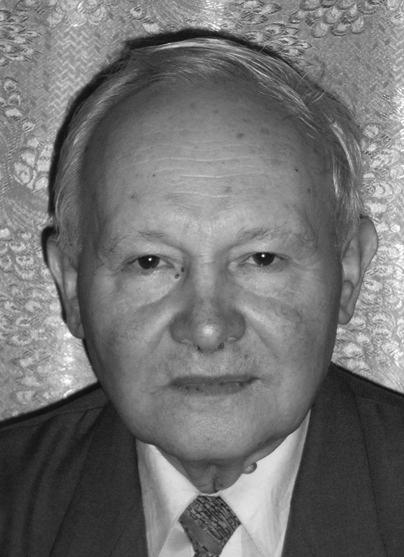
Valery Il’ich Kravtasov (1929-2016) headed the Dept during 1973-1994 period, and known for his systematic studies of multistep electrode reactions of metal complexes. He completed two useful monographs on this topic (in Rissian) in 1969 and 1985. He made important development of Durdin’s topic, moving from formal kinetics of complex reactions to consideration of their inner- or outersphere nature.
Valeryi Veniaminovich Malev (1939-2022) combined experimental experience and theoretical beckground, being an expert in mass transport phenomena in electrochemical and membrane systems. In respect to classical research direction of the Dept, his important contribution was consideration of nonequilibrium ‘double layer’ effects on the electrode kinetics. He spent some period in the Institute of Cytology, dealing with biological membranes, and retured to the University as a head of Dept of electrochemistry in 1994, remaining at this post up to 2013. He initiated the fundamental works on electrochemistry of conducting polymers and other intercalating electrodes, being currently the principle direction of the Dept. Obituary in Russian.
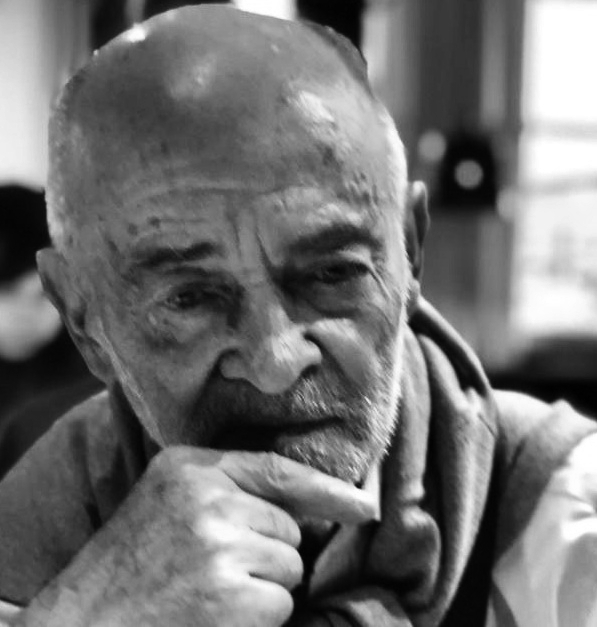
Some articles of Ya.V. Durdin and later articles published by Dept members on the electrode reactions of metal complexes are collected at a separate page.
Representative articles of applied electrochemical schools from StPetersburg/Leningrad are available at a separate page.