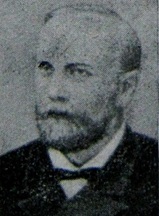
Kazan is a capital of Tatarstan region, a large city located in the middle reaches of the Volga river. Kazan University was established in 1804. Working in Kazan, Karl Claus discovered ruthenium element in platinum ore. Kazan schools of synthetic chemistry (mostly organic) were very strong already in XIX century and generated young chemists for the whole Russian Impire/USSR (see in A.E. Arbuzov’s review, Uspekhi Khimii. 1940. V. 9. P. 1378-1394, in Russian). In what follows, we only mention Kazan scientists who contributed to electrochemistry-related topics.
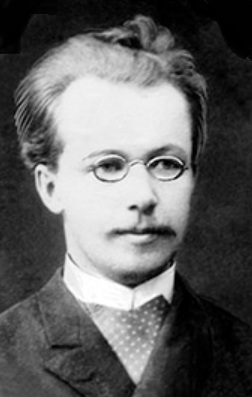
Aleksandr Stepanovich Saveliev (1820-1860) was educated in St. Petersburg and started his research under supervision of Heinrich Friedrich Emil Lenz (1804-1865), working on galvanic polarization. He spent about 10 years of his very short life in Kazan, and continued with….
The article of E.A. Budreiko about Saveliev’s studies of solution conductivity, Zhurnal Fizicheskoi Khimii. 1957. V. 31. P. 920-922, in Russian.
Robert Andreevich Kolli (1845-1891) was a physicist of Scottish origin, graduated from Moscow University, who also worked in Kazan for about 10 years. He generated some original ideas concerning the nature of electrode polarisation…. His first supervisor, world-famous physicist A.G. Stoletov (1839-1896) published scientific obituary (in Russian)….