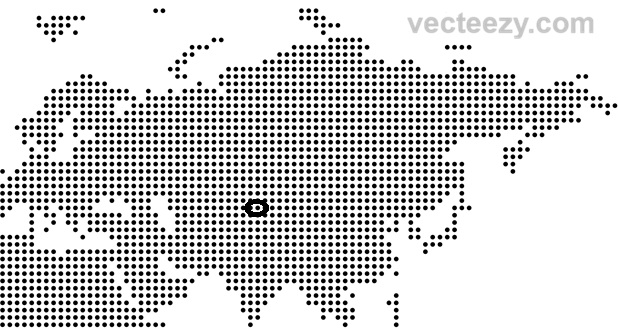
Kazakhstan is a large country located to the East of the Kaspian Sea. Its largest city and the former capital Almaty is shown at the map. This city was developed starting from the Russian outpost Vernyi established in the mid of XIX century, and accumulated a lot of educated people from various regions of Russia and Ukraine, partly because Kazakhstan served as a place of exile during various epochs.
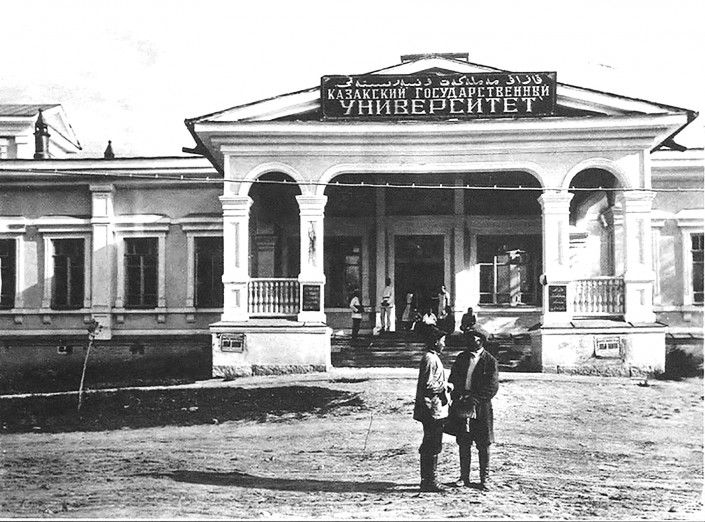
Kazakh University in Almaty was started in 1934 on the basis of gymnasium (secondary school). It is now named Farabi University.
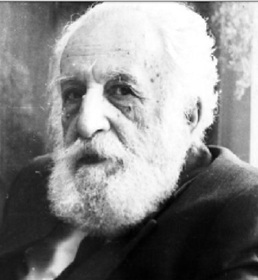
Mikhail Il’ich Usanovich <Ussanowitsch> (1894-1981) originated from Ukraine. He graduated from Kiev University in 1917, and worked in Kiev up to 1929, in close contact with V.A. Plotnikov. This surely affected his interest to non-aqueous solutions. During 1929-1935 period, Usanovich was affiliated with Tomsk University and Siberian Physico-Technical Institute in Tomsk, and then moved to Middle Asia: first to Tashkent (Uzbekistan), and finally to Alma-Ata, where he continued for decades. He is mostly known for his very general definition of acids and bases, published in Zhurnal Obschchei Khimii. 1939. We are looking for full text.
Here are several examples of Usanovich’s (and/or his collaborators) works of early 1930s on the conductivity of solutions in ethers, believed to be the solvents of the same polarity as water, but with essentially different solvation behavior. Basic (Plotnikov-inspired) approach assumed formation of solute-ether complexes able to dissociate. This approach was applied to solutions of SbCl3, SbBr3, AsBr3, AsCl3, PCl3, acetic acid, and sulfuric acid (many works of this series addressed viscosity as well). This was surely the precursor of his acid-base generalisation, still discussed in the literature.
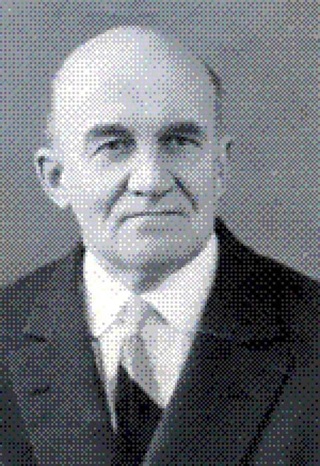
Mikhail Tikhonovich Kozlovskyi (1903-1972), educated in Odessa, headed analytical chemistry Dept in 1939-1971 and developed polarographic analysis…
Olga Alfredovna Songina (nee Rohde) (1901-1989) appeared in Almaty in 1945, being in exile starting from 1937 (she worked initially in Bishkek <Frunze during that time>, Kyrgyzstan). Her personal and professional biography is well documented in the article of Fritz Scholz in J. Solid State Electrochemistry. 2013. V. 17. P. 1493-1504. She made a lot for analysis of minerals and other naturap products (1945 PhD thesis on tungsten analysis, 1957 thesis on amperometric titration). After a period of work with M.T. Kozlovskyi, she arranged the Dept of the chemistry of rare elements, and headed it up to 1981. Here is a brief article dedicated to her centenary.
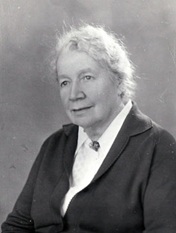
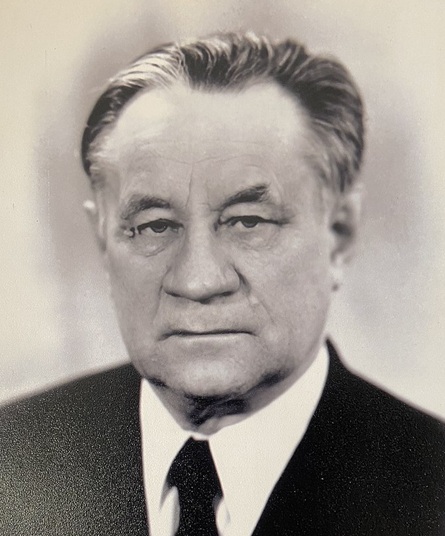
Dmitryi Vladimirovich Sokolskyi (1910-1987) originated from Moscow University, where he worked directly with a famous catalysis person, Aleksey A. Balandin, who was arrested twice, being taken away from academic activities during 1936-1939 and 1949-1953 periods. Sokolskyi managed to defend his PhD thesis in 1937, and was sent to Kazakhstan, where the Institute of Organic Catalysis and Electrochemistry is named after him now. He established this institute in 1969, …