We are very grateful to late Professor Mikhail Zinovievich Iofa (1942-2022) for the copies of very rare photos and documents, and for his sincere feeling in respect to the history of Moscow University.
Zinovyi Aleksandrovich (Zalman Aizikovich) Iofa (1895-1990) played literally unique role in the development of electrochemistry in Moscow University. He connected Spitalsky and Frumkin periods, and supervised the vast majority of students at the Dept of electrochemistry at least during two first decades of its existence. He worked in both basic and applied directions, and worked out many experimental techniques later used at the Department. He was uniquely friendly and helpful person, and also extremely modest.
Iofa’s early professional route was very complex. He originated from a small town Nikol’sk (Vologda province), and started his classes in Vetluga (Kostroma province). In 1909, he took gymnasium exams as external student in Kostroma, and became an apprentice pharmacist in Vetluga, and got the certificate of the pharmacy assistant in 1913 from Kazan University. After army service in 1916-1917, he moved to Moscow, and entered the private (Shanyavsky’s) University in 1918. After reorganization of this University, he moved to Chemical division of the Physical-Mathematical Faculty of Moscow University, and graduated in 1922.
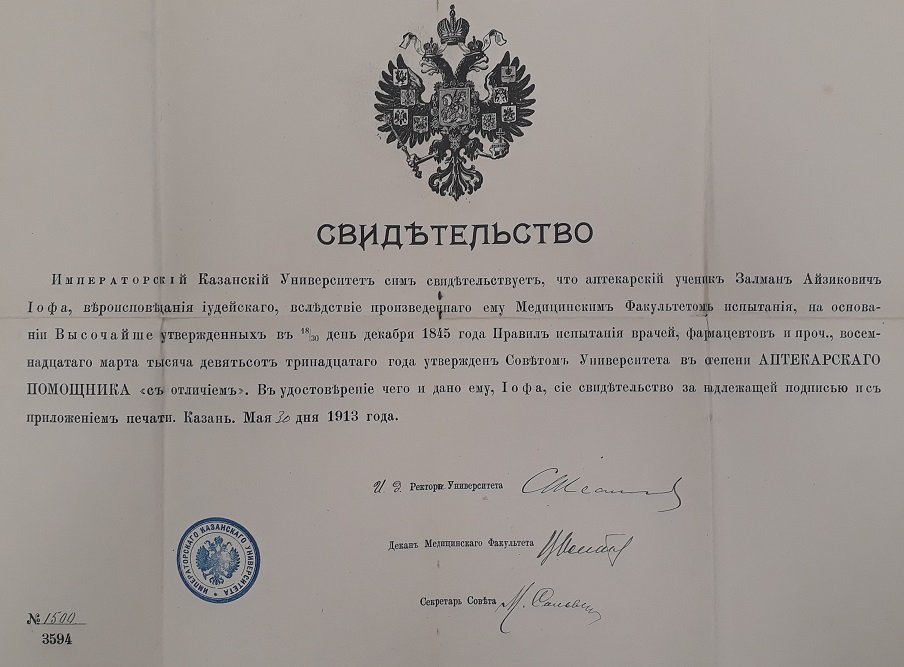
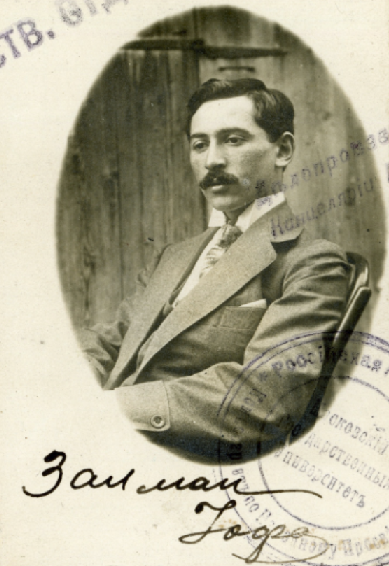
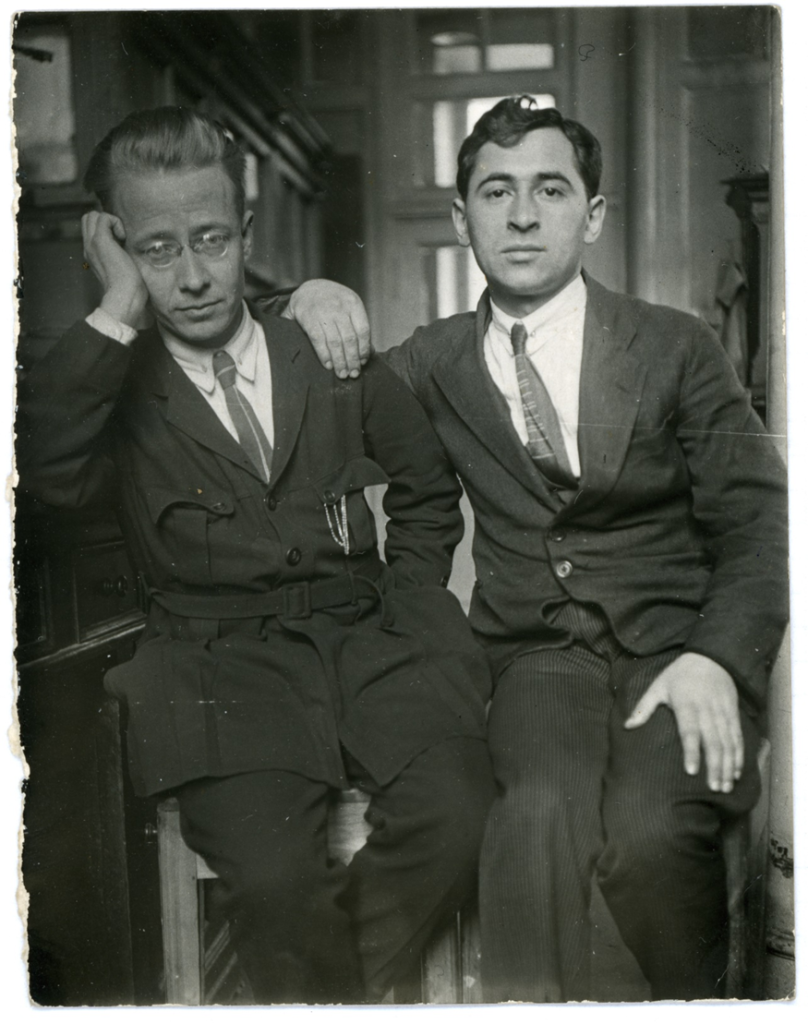
A photo with A.V. Komandin (left) is from pre-Frumkin period, supposedly taken in 1925-1927. They were from Shpitalskyi’s lab, and worked on electrosynthesis of chlorates/perchlorates, and also on fabrication of inorganic dyes. The closest Iofa’s collaborator of that period was Lipa L’vovich Klyachko-Gurvich (1896-1959). Later he and Z.A. Iofa also worked together on lead battery during WWII, being moved to Ashkhabad (Turkmenistan).
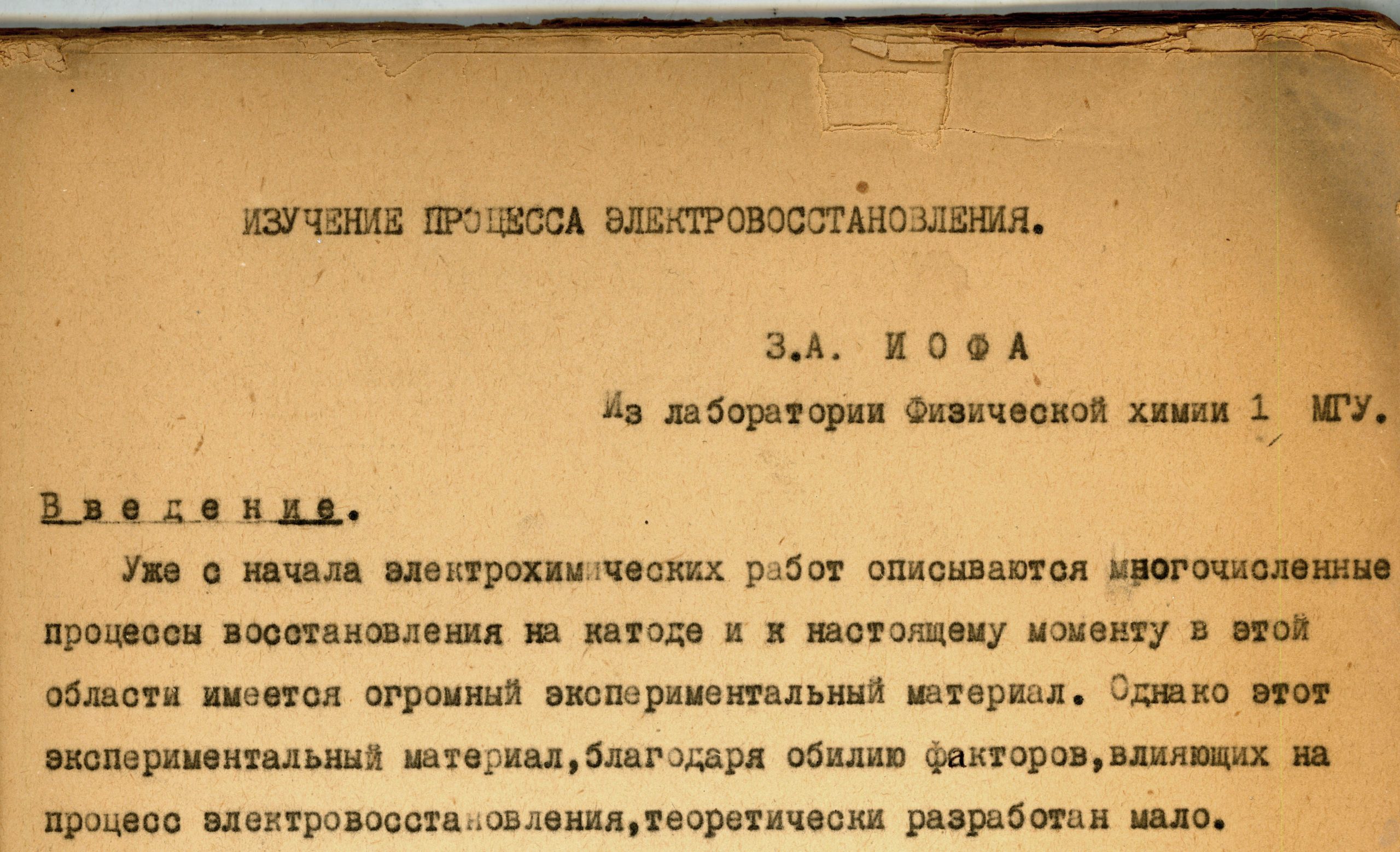
Iofa’s PhD thesis “The study of electroreduction process” was completed in 1929, just when Shpitalsky was arrested. This typewritten ms (here is the starting page) mostly addresses hydrogen evolution, but not only. Before foundation of the Dept of electrochemistry, he continued at the Dept of physical chemistry, and was promoted to associate professor in 1933. His habilitation took place in 1941 (DSc thesis on electrocapillary phenomena and hydrogen evolution kinetics from concentrated electrolyte solutions).
Before WWII, the Dept staff was limited to very few staff persons, and a lot of students were supervized by Z.A. Iofa, as well as many interns. He had numerous diploma students in 1940s and 1950s as well. His hand-written lists of supervized students contain about a hundred of names.
His work was interrupted in 1936, when he was arrested, but fortunately released from prison in few months. This happened because his 1935 intern from Nizhnii Novgorod [Gor’kyi] Ivan Alekseyevich Maslennikov (1905-1936) was accused of “counter-revolutionary terrorist activities” and finally shot. Security officers looked for Iofa’s participation in these activities, but were unable to get any incriminating testimony.
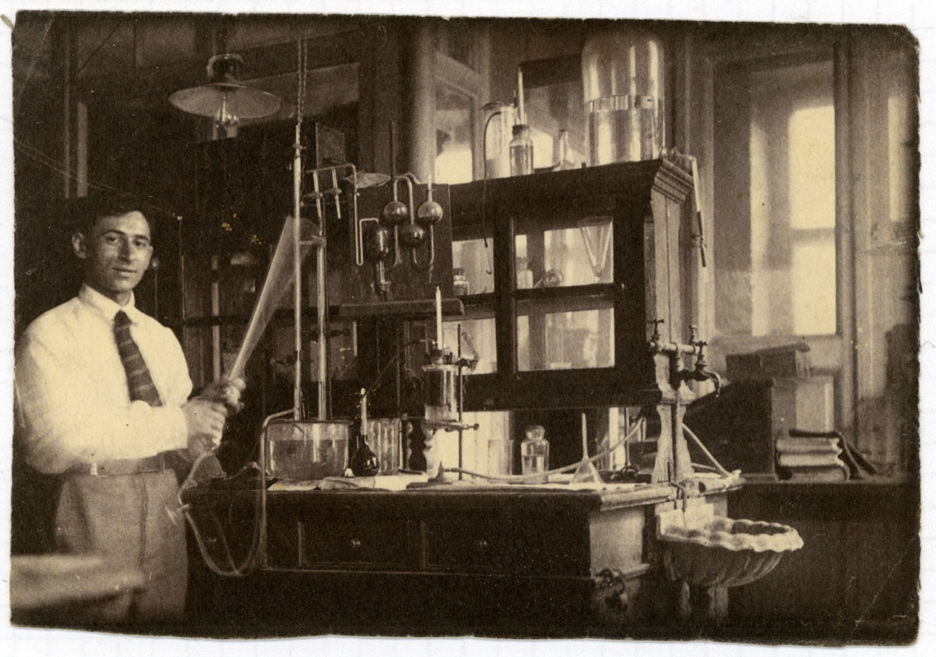
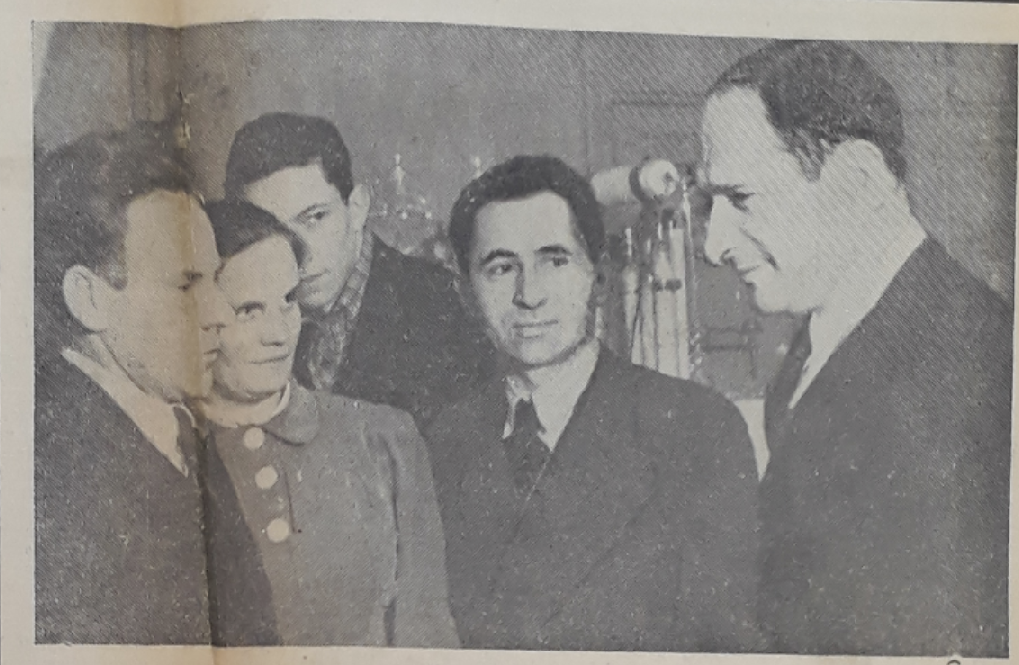
This is a photo from the local Moscow University newspaper N 13 (630) from March 23, 1941, in which Iofa’s notice was published, dedicated to Frumkin’s state award. The notice reports that about 150 electrochemists already graduated during the 10-year period. In parallel with academic activities, Zinovyi A. Iofa continued with corrosion protection (inhibitors), lead-acid batteries, and alkaline air batteries with carbon cathode. When he finally was retired in the beginning of 1980s, he started to learn some branches of physics for which, as he told, he had a limited time during all his life. One could also meet him, on his ninth decade, in philharmony or skying in the park in the vicinity of his flat.
List of publications (under construction)
1928-1936
- Spitalsky E, Jofa S. Direkte oxydimetrische Bestimmung von Perchlorat neben großen Mengen von Chlorat und Chlorid // Z. anorg. allgem. Chem. 1928. V. 169. P. 309-318.
- Iofa Z.A., Klyachko-Gurvich L.L. Fabrication of the copper acetate // Zhurnal Prikladnoi Khimii. 1930. V.3. P. 361-365, in Russian. This is indirect translation of the title, in which specific Russian nomenclature of substances was used. The target salt is Cu(II) acetate, being of interest as a dye. The article is submitted already after Spitalsky’s arrest, and the first footnote mentions Spitalsky’s supervision of this work (the same for the next article).
- Iofa Z.A., Kobrin S.M., Klyachko L.L. Fabrication of hydroxo cupric dye from the copper acetate // Zhurnal Prikladnoi Khimii. 1930. V. 3. P. 366-374, in Russian. Again, translation is indirect, fabrication of Cu(II) hydroxoacetate from Cu(II) acetate is considered.
- Iofa Z.A. Electrochemical dissolution of lead using dual flow-type diaphragms // Zhurnal Prikladnoi Khimii. 1935. V. 8. P. 397-411, in Russian. Abstract in English.
- Iofa Z.A. The obtaining of crystal[line] litharge in aqueous medium // Zhurnal Prikladnoi Khimii. 1935. V. 8. P. 412-424, in Russian. Abstract in English.
- Iofa Z.A., Bruzkus E.B., Vengerova W.J. Electrochemical purification of phosphoric acid // Zhurnal Prikladnoi Khimii. 1935. V. 8. P. 840-847, in Russian. Abstract in English. This article is affiliated with the Institute of Fertilizers. Elena Borisovna Bruz<ts>kus (1897-1974) was an expert in technology of phosphate fertilizers.
1937-1945
- Jofa S. The overvoltage on a mercury cathode in concentrated solutions of acids. I. Hydrochloric and hydrobromic acids // Acta Physicochimica URSS. 1939. V. 10. P. 903-912. In Russian: Zhurnal Fizicheskoi Khimii. 1939. V. 13. P. 1435-1448. Part II is published with Frumkin in 1943 (in English) and 1944 (in Russian).
- Jofa S., Kabanov B., Kuchinski E., Chistyakov F. Overvoltage on mercury in the presence of surface-active electrolytes // Acta Physicochimica URSS. 1939. V. 10. P. 317-332. In Russian: Zhurnal Fizicheskoi Khimii. 1939. V. 13. P. 1105-1116. Participation of P.V. Agarkov (student) is mentioned.
- Kabanov B., Jofa S. The hydrogen overvoltage on lead and the capacity of the lead electrode // Acta physicochimica URSS. 1939. V. 10. P. 617-629.
- Kabanov B., Filippov S., Vanyukova L., Iofa Z., Prokofieva A. Hydrogen overvoltage on lead // Zhurnal Fizicheskoi Khimii. 1939. V. 13. P. 341-349, in Russian.
- Iofa Z., Ustinskyi B., Eiman F. Electrocapillary curves in concentrated solutions of acids. II. Adsorption of ions in HCl, HBr, and H2SO4 solutions // Zhurnal Fizicheskoi Khimii. 1939. V. 13. P. 934-941, in Russian. Part I is published by Frumkin and Iofa in the same issue. Boris Zinovievich Ustinskyi was a student who later worked in applied electrometallurgy (PhD 1949 in the Inst of Metallurgy, anodic dissolution of metal sulfides). F.I. Eiman was a student studying heat capacity of metastable salts, most probably at the Dept of physical chemistry (PhD 1941). He worked in Khabarovsk Medical Univ later.
- Iofa Z.A., Kolychev A.N. On the application of the dropping mercury electrode to the measurement of overvoltage // Zhurnal Fizicheskoi Khimii. 1940. V. 14. P. 58-68, in Russian. Translated version published later is co-authored by Jofa S., Kolychev A., Shtifman L. // Acta Physicochim. URSS. 1940. V. 12. P. 231-242.
- Z.A. Iofa, K.P. Mikulin. Temperature coefficient of hydrogen overvoltage on the mercury cathode // Zhurnal Fizicheskoi Khimii. 1944. V. 18. P. 137-142, in Russian. There is an observation important for future considerations of the activationless electrode reactions.
- Z. Iofa. Hydrogen overvoltage on the lead cathode in concentrated solution of acids // Zhurnal Fizicheskoi Khimii. 1945. V. 19. P. 117-124, in Russian.
- Iofa Z., Stepanova V. Hydrogen overvoltage on the mercury cathode in concentrated solutions of acids. III. Temperature coefficient of overvoltage // Zhurnal Fizicheskoi Khimii. 1945. V. 19. P. 125-131, in Russian.
- Iofa Z.A., Losev V.V., Tretiakov I.I. On the reasons of appearance and disappearance of the current maximums at polarographic curves // Zhurnal Fizicheskoi Khimii. 1945. V.19. P. 358-364, in Russian.
1946-1955
- Bagotsky V.S., Jofa S.A. On the appearance of atomic hydrogen on the mercury cathode and the mechanism of the cathodic reduction of WO3 // Doklady Akademii Nauk SSSR. 1946. V.53. P. 443-446, in Russian. Translated version: Comptes Rendus (Doklady) de l’Academie des Sciences de l’URSS. 1946. V. 53. P. 439-442.
- Kuznetsov V.A., Iofa Z.A. On the mechanism of inhibitor action in the course of iron dissolution in acids // Zhurnal Fizicheskoi Khimii. 1947. V. 21. P. 201-214, in Russian.
- Iofa Z.A., Pechkovskaya Z.B. Kinetics of amalgam decomposition and hydrogen overvoltage on the mercury cathode in alkaline solutions // Doklady Akademii Nauk SSSR. 1948. V. 59. P. 265-268, in Russian.
- Iofa Z.A., Moisseyeva N.B., Mirlina S.Ya., Krymakova E.E. On the formation of hydrogen peroxide in the alkaline carbon element with air depolarization // Zhurnal Prikladnoi Khimii. 1948. V. 21. P. 329-340, in Russian.
- Iofa Z.A., Mirlina S.Ya., Moisseyeva N.B. The study of the processes on zink electrode of the alkaline element // Zhurnal Prikladnoi Khimii. 1949. V. 22. P. 983-994, in Russian.
- Iofa Z.A., Medvedeva L.A. On the passivating effect of halloid ions on iron in concentrated solutions of acids // Doklady Akademii Nauk SSSR. 1949. V. 69. P. 213-216, in Russian.
- Iofa Z.A., Shimshelevich Ya.B., Andreeva E.P. Oxygen reaction on the mercury electrode // Zhurnal Fizicheskoi Khimii. 1949. V. 23. P. 828-838, in Russian.
- Iofa Z.A., Lyakhovitskaya E.I. , Sharifov K. The effect of halide ions on adsorption of organic cations at the surface of iron // Doklady Akademii Nauk SSSR. 1952. V. 84. P. 543-546, in Russian.
- Iofa Z.A., Lyakhovitskaya E.I. On the mechanism of inhibitor action on the hydrogen embrittlement of steel in sulfuric acid // Doklady Akademii Nauk SSSR. 1952. V. 86. P. 577-580, in Russian.
- Kaptsan O.L., Iofa Z.A. On the theory of amalgams decomposition by solutions of electrolytes // Zhurnal Fizicheskoi Khimii. 1952. V. 26. P. 193-200, in Russian.
- Kaptsan O.L., Iofa Z.A. Amalgams decomposition and hydrogen overvoltage on mercury in alkaline solutions // Zhurnal Fizicheskoi Khimii. 1952. V. 26. P. 201-210, in Russian.
- Iofa Z.A., Rozhdestvenskaya G.B. The measurement of iodide ions adsorption on iron // Doklady Akademii Nauk SSSR. 1953. V. 91. P. 1159-1162, in Russian.
- Iofa Z.A. On the hydrogen overvoltage on mercury in alkaline solutions // Zhurnal Fizicheskoi Khimii. 1954. V. 28. P. 1163-1165, in Russian. The interplay of hydrogen evolution and amalgam formation is addressed.
1956-1965
- Nikiforova M.M., Iofa Z.A. Passivation and depassivation of the lead anode in concentrated hydrofluorosilicic, perchloric, and tetrafluoroboric acids. Doklady Akademii Nauk SSSR. 1957. V. 115. P. 1131-1134, in Russian. Translated version : Proc. Akad. Sci. USSR Phys. Chem. Section. 1957. V. 115. P. 575-578.
- Iofa Z.A., Besproskurnov G.G. The study of the mechanism of iron atmospheric corrosion in the presence of sulfur dioxide as aggressor // Zhurnal Fizicheskoi Khimii. 1957. V. 31. P. 2236-2244, in Russian, abstract in English (the last page).
- Iofa Z.A. Adsorption of sulphur on iron from acid solutions of hydrogen sulphide // Doklady Akademii Nauk SSSR. 1958. V. 119. P. 971-974, in Russian. Translated version: Proc. Akad. Sci. USSR Phys. Chem. Section. 1958. V. 119. P. 241-244.
- Chyuan-hsin Tza, Iofa Z.A. The combined action of organic cations and halide anions on the evolution of hydrogen on a mercury electrode // Doklady Akademii Nauk SSSR. 1959. V. 125. P. 1065-1067, in Russian. Translated version: Proc. Akad. Sci. USSR Phys. Chem. Section. 1959. V. 125. P. 343-345. The first author is Chuansin Cha (1925-2019), who had been a visiting scientst in Moscow in 1957-1959 (see his 1960 article below), and later became very important person in Chinese electrochemistry.
- Past V.E., Iofa Z.A. Determination of mercury cathode capacitance from potential decay after switching off polarizing current // Zhurnal Fizicheskoi Khimii. 1959. V. 33. P. 913-919, in Russian, abstract in English (the last page).
- Past V.E., Iofa Z.A. The study of the surfce state of nickel and iron cathodes from potential decay after switching off the current // Zhurnal Fizicheskoi Khimii. 1959. V. 33. P. 1230-1237, in Russian, abstract in English (the last page).
- P<B>ao-ting Hua, Shen H<X>sing-su, Iofa Z.A., Mikhailova E.I. The effect of halogen ions on the corrosion of spotless steel 18-8 in sulphuric acid // Doklady Akademii Nauk SSSR. 1960. V. 130. P. 129–132, in Russian. Translated version: Proc. Acad. Sci. USSR. Phys. Chem. Section. 1960. V. 130. P. 25-28. Two first authors were from Changchun Institute of Applied chemistry (China). Baoding Hua became a victim of Cultural revolution in 1968, see Xingsu Shen’s memorial text here. Emma Ivanovna Mikhailova worked at the Dept of Electrochemistry up to her retirement in 1980s.
- Tza Chuan-sin, Iofa Z.A. Investigation of the adsorption of surface active ions on a zinc electrode by measuring the differential capacitance // Doklady Akademii Nauk SSSR. 1960. V. 131. P. 137-140, in Russian. Translated version: Proc. Acad. Sci. USSR. Phys. Chem. Section. 1960. V. 131. P. 231-234.
- Iofa Z.A., Tomashova G.N. Joint action of hydrogen sulfide and organic compounds on corrosion and embrittlement of iron in sulfuric acid // Zhurnal Fizicheskoi Khimii. 1960. V .34. P. 1036-1043, in Russian. Translation: Corrosion. 1963. V. 19. P. 12t-16t.
- Iofa Z.A., Maznichenko E.A. The influence of the nature of the cations on the overvoltage of hydrogen liberation <evolution> from alkaline solutions at a mercury cathode // In: Soviet Electrochemistry (Proceedings of the fourth conference on electrochemistry), Consultant Bureau: NY, 1961. V. 1. P. 125-128. This translation of 1956 conference contribution is published belatedly, Russian version is published in 1959.
- Ivanov V.F., Iofa Z.A. The study of the kinetics of iron electroreduction on the dropping mercury electrode // Doklady Akademii Nauk SSSR. 1961. V. 137. P. 1149-1152, in Russian. Translated version: Proc. Acad. Sci. USSR. Phys. Chem. Section. 1961. V. 137. P. 331-334.
- Sobol V.V., Iofa Z.A. The study of the iron electrode surface by measuring the potential decay after current interruption // Doklady Akademii Nauk SSSR. 1961. V. 138. P. 1151-1154, in Russian. Translated version: Proc. Acad. Sci. USSR. Phys. Chem. Section. 1961. V. 138. P. 480-482.
- Ivanov V.F., Iofa Z.A. On the formation of amalgams of the iron group metals on the dropping mercury electrode // Doklady Akademii Nauk SSSR. 1961. V. 140. P. 1368-1371, in Russian. Translated version: Proc. Acad. Sci. USSR. Phys. Chem. Section. 1961. V. 140. P. 796-799.
- Korshunov V.N., Iofa Z.A. On the kinetics of alkali metal amalgams decomposition in the alkaline electrolyte solutions // Doklady Akademii Nauk SSSR. 1961. V. 141. P. 143-146, in Russian. Translated version: Proc. Acad. Sci. USSR. Phys. Chem. Section. 1961. V. 141. P. 828-831.
- Frumkin A.N., Korshunov V.N., Iofa Z.A. On the kinetics of alkali metal amalgams decomposition in buffered solutions // Doklady Akademii Nauk SSSR. 1961. V. 141. P. 413-416, in Russian. Translated version: Proc. Acad. Sci. USSR. Phys. Chem. Section. 1961. V. 141. P. 884-887.
- Maznichenko E.A., Damaskin B.B., Iofa Z.A. The effect of alkali metal cations on the hydrogen overvoltage on mercury in acidic solutions // Doklady Akademii Nauk SSSR. 1961. V. 138. P. 1377-1380, in Russian. Translated version: Proc. Acad. Sci. USSR. Phys. Chem. Section. 1961. V. 138. P. 490-493.
- Iofa Z.A., Batrakov V.V., Cho-Ngok-Ba. Influence of anion adsorption on the action of inhibitors on the acid corrosion of iron and cobalt // Electrochim. Acta. 1964. V. 9. P. 1645-1653.
- Kurygina D.V., Iofa Z.A. Calcium electrode of galvanic element in methanolic solutions // In: Protective metallic and oxide coatings, metals corrosion, and the studies in electrochemistry, Fedotyev N.P. (ed.), 1965, Moscow-Leningrad: Nauka Publ. P. 270 – ?
- Mikhailova E.I., Iofa Z.A. Influence of halide anions and certain organic compounds on the electrochemical behavior of nickel in acid solution // Sov. Electrochem. 1965. V. 1. P. 89-91. Russian version: Elektrokhimiya. 1965. V. 1. P. 107-110.
- Batrakov V.V., Iofa Z.A. Measurement of impedance of an iron electrode by means of alternating current // Sov. Electrochem. 1965. V. 1. P. 101-107. Russian version: Elektrokhimiya. 1965. V. 1. P. 123-129.
- Iofa Z.A., Makarova V.A. The influence of halide ions and organic surface-active agents on the discharge of hydrogen ions at a copper electrode in acid solutions // Sov. Electrochem. 1965. V. 1. P. 193-196. Russian version: Elektrokhimiya. 1965. V. 1. P. 230-233.
- Roshchupkina L.M., Khonina V.F., Ivanov V.F., Iofa Z.A. The appearance of catalytic current maxima during the electrolytic reduction of metals of the iron group on a mercury-drop electrode // Sov. Electrochem. 1965. V. 1. P. 874-876. Russian version: Elektrokhimiya. 1965. V. 1. P. 982-985.
1966-1980
- Iofa Z.A., Wei Pao-ming. Influence of the structure of electroytic cobalt and insertion of chloride ions into a deposit upon electrochemical properties and corrosion in sulfuric acid solution // Sov. Electrochem. 1966. V. 2. P. 699-702. Russian version: Elektrokhimiya. 1966. V. 2. P. 755-759.
- P’yankova A.P., Batrakov V.V., Iofa Z.A. The problem of the increase in hydrogen overpotential on iron during cathodic polarization in alkaline solutions // Sov. Electrochem. 1966. V. 2. P. 923-927. Russian version: Elektrokhimiya. 1966. V. 2. P. 1000-1005.
- Khonina V.F., Roshchupkina L.M., Ivanov V.F., Iofa Z.A. Influence of the kinetics of adsorption of tetrabutylammonium cations and nature of reducing metal <ions> on catalytic current of hydrogen on a dropping mercury electrode // Sov. Electrochem. 1966. V. 2. P. 1111-1113. Russian version: Elektrokhimiya. 1966. V. 2. P. 1212-1214. Reduction of M2+ (M = Ni, Fe, Co) cations is under study.
- Iofa Z.A., Batrakov V.V., Nikiforova Yu.A. On the influence of deformation and heat treatment of Fe on adsorption and action of corrosion inhibitors // Corrosion Sci. 1968. V. 8. P. 573-582.
- P’yankova A.P., Iofa Z.A. Effect of carbon monoxide adsorption and the formation of iron carbides on the electrode behavior of the iron electrode in alkaline solutions // Sov. Electrochem. 1968. V. 4. P. 510-513. Russian version: Elektrokhimiya. 1968. V. 4. P. 571-574.
- Batrakov V.V., Gamil’ Khanna Avad, Mikhailova E.I., Iofa Z.A. Differential capacity curves of metals of the iron group and their interpretation // Sov. Electrochem. 1968. V. 4. P. 540-543. Russian version: Elektrokhimiya. 1968. V. 4. P. 601-605.
- Lanina S.Ya., Iofa Z.A. Hydrogen evolution at a copper electrode and anodic oxidation of copper in acidic and alkaline solutions // Sov. Electrochem. 1969. V. 5. P. 327-330. Russian version: Elektrokhimiya. 1969. V. 5. P. 359-362.
- Lanina S.Ya., Iofa Z.A. Influence of some additives on anodic and cathodic reactions on copper electrodes in alkaline solutions // Sov. Electrochem. 1969. V. 5. P. 404-407. Russian version: Elektrokhimiya. 1969. V. 5. P. 445-448.
- Mikhailoova E.I., Iofa Z.A. Investigation of the adsorption of halogen aniona on nickel in acid solutions by means of impedance measurements // Sov. Electrochem. 1970. V. 6. P. 221-223. Russian version: Elektrokhimiya. 1970. V. 6. P. 231-234.
- Batrakov V.V., Nikiforova Yu.A., Iofa Z.A. Effect of mechanical and thermal treatment on the adsorption properties of iron in alkaline solutions // Sov. Electrochem. 1970. V. 6. P. 985-987. Russian version: Elektrokhimiya. 1970. V. 6. P. 1017-1020.
- Iofa Z.A., Fang Lyong Kam. Influence of pH on the electrochemical reactions involved in the corrosion of iron in the presence of inhibitors // Sov. Electrochem. 1971. V. 7. P. 669-671. Russian version: Elektrokhimiya. 1971. V. 7. P. 696-699.
- Batrakova Yu.A., Batrakov V.V., Iofa Z.A. Relationship between the microstructure and adsorption properties of an iron electrode // Sov. Electrochem. 1971. V. 7. P. 967-970. Russian version: Elektrokhimiya. 1971. V. 7. P. 1008-1012.
- Batrakov V.V., Batrakova Yu.A., Iofa Z.A. Influence of mechanical and thermal treatment of iron on the effectiveness of corrosion inhibitors // Sov. Electrochem. 1971. V. 7. P. 971-973. Russian version: Elektrokhimiya. 1971. V. 7. P. 1012-1014.
- Batrakov V.V., Avad G.Kh., Iofa Z.A. Influence of the pH of solution on the adsorption and inhibiting action of the surface-active substances on cobalt // Sov. Electrochem. 1972. V. 8. P. 587-589. Russian version: Elektrokhimiya. 1972. V. 8. P. 603-606.
- P’yankova A.P., Iofa Z.A. Use of the rotaticg disk electrode to study the reactions on an iron electrode in alkaline solution // Sov. Electrochem. 1974. V. 10. P. 1284-1287. Russian version: Elektrokhimiya. 1974. V. 10. P. 1344-1348.
- Iofa Z.A., Saad Abdel’ Vakhab. Influence of organic surfactants on discharging of hydrogen ions on a cadmium electrode in aqueous solutions // Sov. Electrochem. 1974. V. 10. P. 1288-1290. Russian version: Elektrokhimiya. 1974. V. 10. P. 1349-1351.
- Iofa Z.A., Saad Abdel Vahab. Investigation of the adsorption of tribenzylamine and caproic acid on cadmium by the method of measurement of differential capasitance // Sov. Electrochem. 1975. V. 11. P. 1497-1499. Russian version: Elektrokhimiya. 1975. V. 11. P. 1601-1604.
- Iofa Z.A., Saad Abdel’ Vakhab. Investigation of the adsorption of tetraalkylammonium iodides on cadmium by differential capasitance measurement // Sov. Electrochem. 1975. V. 11. P. 1657-1660. Russian version: Elektrokhimiya. 1975. V. 11. P. 1763-1767.
- Mikhailova E.I., Iofa Z.A. Adsorption of some organic compounds at nickel and their influence on the kinetics of electrochemical reactions in acidic solutions // Sov. Electrochem. 1976. V. 12. P. 636. Abstract of 13 page article deposited to VINITI.
- P’yankova A.P., Iofa Z.A. Rotating-ring-disk study of the first step of anodic iron ionization // Sov. Electrochem. 1976. V. 12. P. 1613-1614. Abstract of 11 page article deposited to VINITI.