under construction
A separate Faculty of Chemistry in Moscow University was only arranged in 1929, but Chemical division existed for a long time as a part of Physical-Mathematical Faculty. Soon after reorganization of the faculties, new 1930 reform disturbed research and teaching. It took place in a couple of months after establishing Frumkin’s Lab of technical electrochemistry, and delayed the appearance of Dept of electrochemistry up to 1933. This ill-conceived reform attempted to unite chemical education in Moscow by combining all chemical-oriented Faculties in a single specialized institution. Fortunately, it was stopped in 1932, and Faculty of chemistry returned to Moscow University.
Specialized teaching of electrochemistry was started by E.I. Shpitalsky, who arranged the laboratory works in physical chemistry and electrochemistry in 1907, and teached catalysis and electrochemistry as a separate specialization starting from 1914. Ionics (electrolyte solutions) was presented in Kablukov‘s 1902 textbook his lectures.
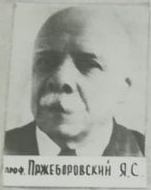
Yaroslav Stepanovich Przheborovskyi (1883-?) was the author of the course “The most novel theories in electrochemistry” mentioned in 1919/20 curriculum. Unfortunately, no program of this course was found in archives.
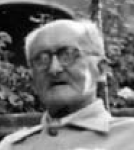
Aleksandr Edmundovich Mozer (1879-1958) teached technical electrochemistry in Moscow University in early 1920s. He spent some time with F. Haber in Germany, working on organic electrochemistry, and they co-authored a book “Die elektrolytischen Prozesse der organischen Chemie” in 1910. Moser was a chemist and engineer and had very wide professional interests, including color music (see in his very unusual biography available in German).
Starting from mid 1933s, the faculty was headed by Adam Vladislavovich Rakovskyi (1879-1941) <obituaries in Russian were published in Uspekhi Khimii. 1942. V. 11. P. 75-77 and in Zhurnal Fizicheskoi Khimii. 1941. V. 15. P. 981-982, available in this e-book>. Rakovskyi’s early works were related to adsorption, and later his major field became chemical thermodynamics. In particular, he studied solubility and solution equilibria, e.g., addressed hydration of polyoxometalates already in early 1930s (P-tungstate, P-molybdate, B-tungstate and metatungstate). These works were considered polyoxometalates molecular structure, which was a matter of sharp discussions just during this period. He worked a lot for industry (separation of inorganic compounds, metallurgy, alcohol production). Rakovskyi’s was a great enthusiast of textbooks translation, and ….
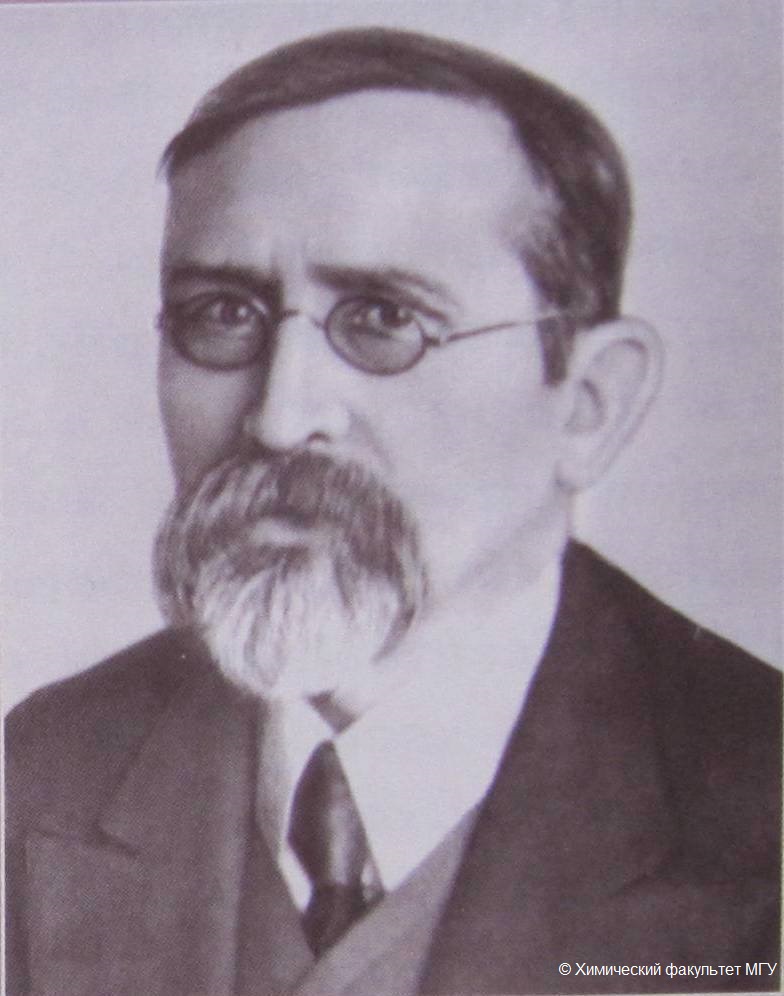
Petin Krause
Lipa Leybovich [L’vovich] Klyachko-Gurvich (1896-1959) was the author of the earliest known electrochemical diploma work in Moscow University. His study under Shpitalsky supervision addressed electrolytic fabrication of copper acetates.
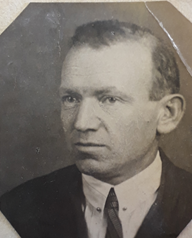
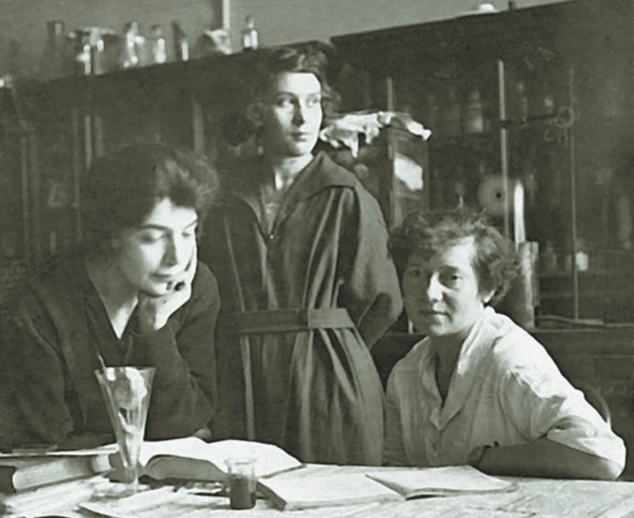
Mariya Solomonovna Golombik (1900-1971), Ekaterina Ivanovna Burova (1895-1958), and Bassa [Basya] Abramovna Konovalova (1891-1947) <from left to right>
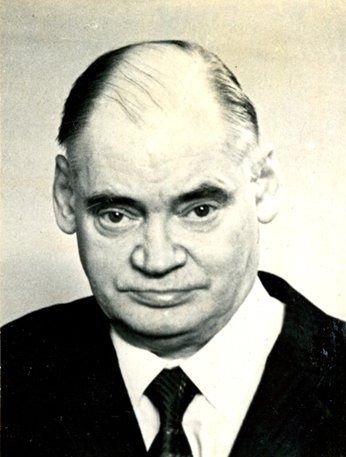
A very active Spitalsky’s follower was Nikolai Ivanovich Kobozev (1903-1974), who is known for his works in heterogeneous catalysis and gas reactions. His early research interests included hydrogen evolution reaction, and a basic work in Z. Elektrochem. 1930. V. 36. P. 529-544 was published jointly with Nikolay Ivanovich Nekrasov. Kobozev insisted on the formation of atomic hydrogen in the solution in the course of hydrogen evolution. Later (starting from 1947) this resulted in a vivid discussion with Frumkin school representatives.
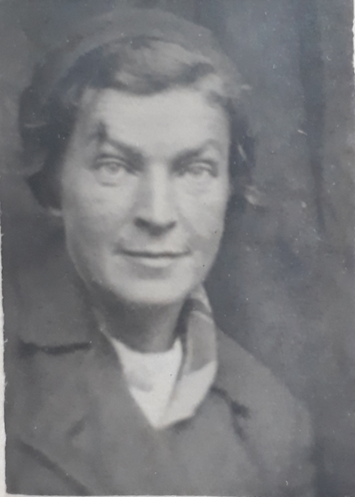
Valentina Viktorovna Monblanova (1896-1968) was Spitalsky’s follower and Kobozev’s co-worker. She first entered Higher women’s courses in 1916, was transfered to Moscow University in 1919, and graduated in 1922. After few years of teaching in various places she was accepted as PhD student and started with electrochemical topics. In particular, she worked with Z.A. Iofa on lead/lead oxide electrochemistry in respect to inorganic dyes fabrication. She was employed as assistant, and later associate professor in 1927, but was forced to leave Moscow University in 1937. Later she teached physical and colloid chemistry in Pirogov Medical Univ. It was believed for a long time that the article(s) of Kobozev and Monblanova introduced the term ‘electrocatalysis’ in 1936, or even in 1934.