Evgenyi Ivanovich S[h]pitalsky (1879-1931) predetermined the development of both electrochemistry and catalysis in Moscow University. During his student period, he was supervised by I.A. Kablukov and N.D. Zelinskyi, and completed his diploma work on the solutions of electrolytes. His catalysis research began in the lab of G. Bredig in Heidelberg in 1905-1907, and was closely linked to the solution equilibria. Later in Moscow he was involved in numerous applied topics, in particular intersecting with electrochemistry, and Z.A. Iofa gained his experimental experience directly from Shpitalsky. The fate of Spitalsky, unjustly arrested in 1929, was tragic. Biographic textsin Russian appeared with a long delay, the most informative ones are the texts authored by Yu.I Soloviev in 1989 and by Moscow Univ people in 2002 (in Russian). Very brief biographic data in English and an incomplete list of publications are presented below.
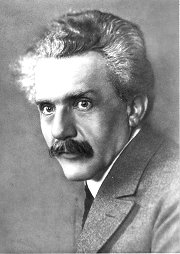
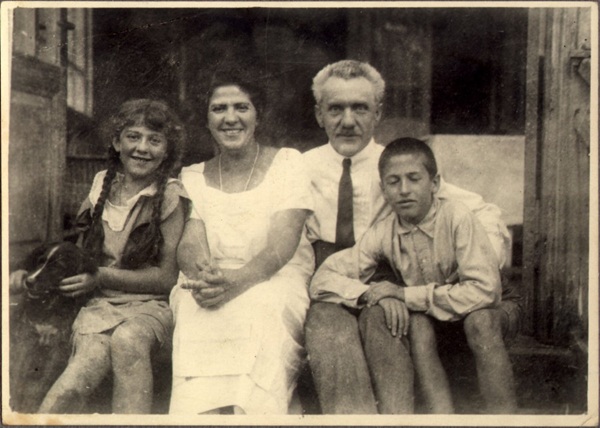
This 1926 photo was published by Shpitalsky’s granddaughter Ksenia Pokrovskaya (nee Belyakova) (1942-2013) in her livejounral. In the centrum is Spitalsky and his wife Nevenka Georgievna Karamalakova (1889?-1962), at the left is their daughter Tatiana, and at the right is their son. When Spitalsky was arrested, Nevenka was sent into exile, and children were transferred to the families of relatives. This was a usual story in USSR of that period.
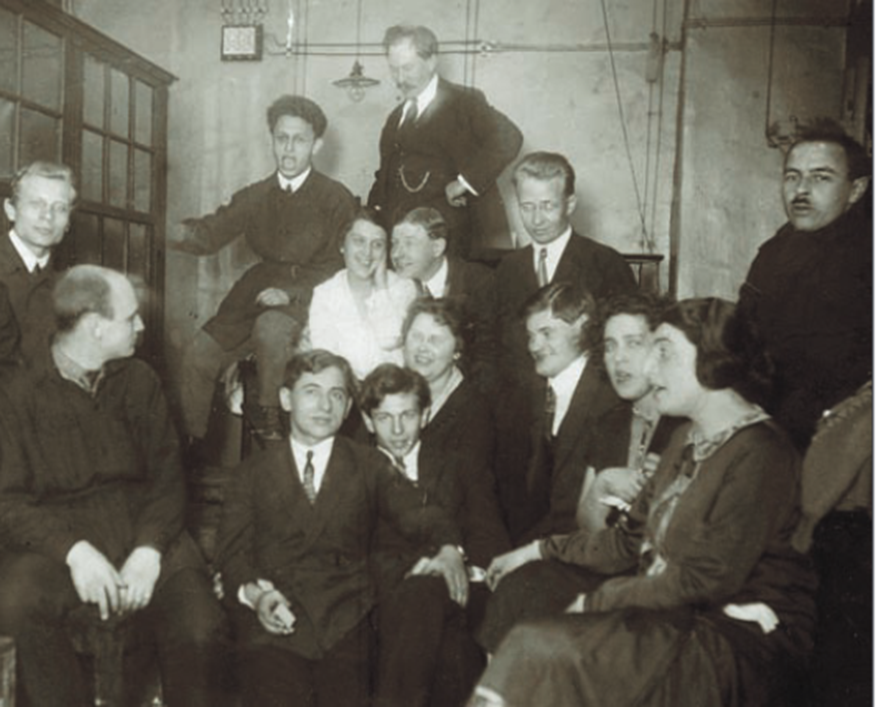
This 1927 photo is published in the ‘History of inorganic chemistry in Moscow University” edited by late Prof Yu.D. Tretyakov. Physical chemistry and electrochemistry sprouted just from inorganic chemistry in this University, and the first separate unit was the physico-chemical Shpitalsky lab, started officially in 1923. N.N. Petin is standing at the top. The second person sitting from the left in the first raw is Z.A. Iofa, and the fifth is N.I. Kobozev.
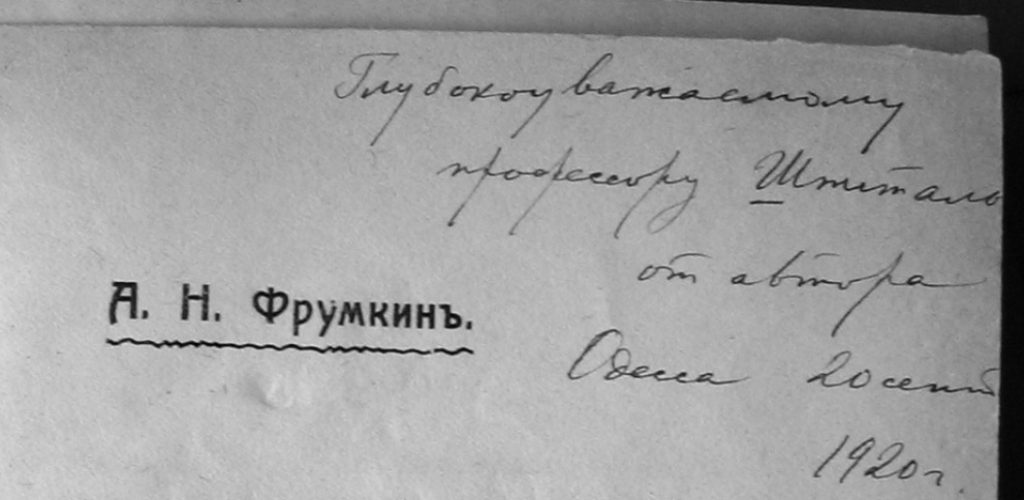
This cover page of Frumkin’s thesis presented to Shpitalsky demonstrates that they got acquainted before Frumkin moved to Moscow (Odessa, September 20, 1920 is indicated). We do not know whether the thesis was sent to Moscow, or presented personally in Odessa. We can only speculate suggest that Frumkin’s link to Shpitalsky could be A.N. Sakhanov, who belonged to Kablukov’s surrounding in Moscow during the same period as Shpitalsky.
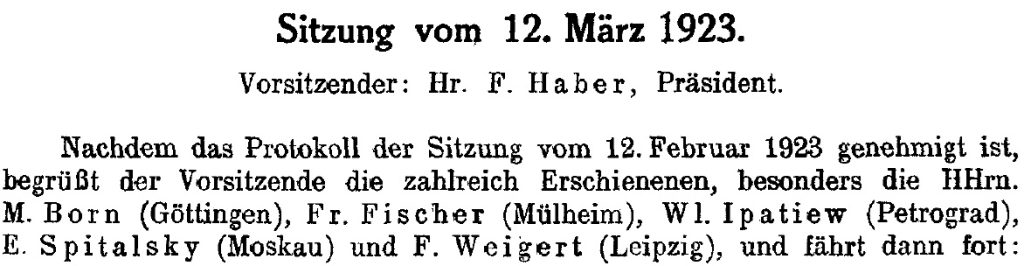
Shpitalsky belonged to the elite international community of chemists. Here is his name as an honorary participant of the meeting of Deutschen Chemischen Gesellschaft in 1923 (Chem. Ber. 1923. Bd. 56. S. A57).
List of publications (incomplete)
- Spitalsky Е. Zur Katalyse durch Chromsaure und ihre Salzen // Z. anorg. Chem. 1907. Bd. 53. S. 184-199, in German.
- Spitalsky E. Uber den Zustand der Chromate und der Chromsaure in wasseriger Losung // Z. anorg. Chem. 1907. Bd. 54. S. 265-314, in German.
- Spitalsky E. Zur Katalyse durch Chromsaure und ihre Salzen. II. Mitteilung // Z. anorg. Chem. 1907. Bd. 56. S. 72-108, in German.
- Spitalsky E. German patent No 225873, 1910. Original is still not found, here is the available more or less direct information.
- Spitalsky E. Über die Katalyse des Wasserstoffsuperoxyds // Chem. Ber. 1910. Bd. 43. S. 3187-3201, in German. Polemic with E.H. Riesenfeld.
- Spitalsky E. On the catalytic decomposition of hydrogen peroxide in homogeneous medium // Zhurnal Russkogo Fiziko-Khimicheskogo Obshchestva. Chast’ Khimicheskaya. 1910. V. 42. P. 1085-1159, in Russian (link electronic book).
- Spitalsky E. Zur Katalyse durch Chromsäure und ihre Salze. Dritte Mitteliung // Z. anorg. Chem. 1911. Bd. 69. S. 179-208, in German.
- Spitalsky E. Über ein einfaches Kölbchen und eine Vorrichtung zur Ausführung chemischer Reaktionen // Fresenius Z. anal. Chem. 1912. Bd. 51. S. 572–573, in German.
- Spitalsky E. Patent “Sprengkraftige u. lagerbestandige Sprengstoffe aus Kaliumchlorat u. Ammoniumperchlorat”, submitted in 1923 (as indicated in Angew. Chem. 1924. Bd. 37. S. 632).
- Spitalsky E., Petin N. Über die Katalyse des Wasserstoffsuperoxyds durch Eisensalze // Z. phys. Chem. A. 1924. Bd. 113. S. 161-198, in German.
- Spitalsky E. Studien uber die Elektrochemische Polarization und uber Elektrodenvorgange // Z. Elektrochem. 1924. Bd. 30. S. 491-493, in German.
- Spitalsky E., Sokolov P.I., Weintraub E.S., with participation of Ziller E.K. and Nemkova O.G. On the process of electrolytic fabrication of chlorate salts // Zhurnal Prikladnoi Khimii. 1924. V. 1. No 1-2. P. 75-90, in Russian.
- Spitalsky E., Sokolov P.I., Weintraub E.S. On the process of electrolytic fabrication of chlorate salts. Part II // Zhurnal Prikladnoi Khimii. 1924. V. 1. No 3-4. P. 69-88, in Russian.
- Spitalsky E.I., Komandin A.V. On the quantitative determination of hypochlorite and chlorate occuring simultaneously in aqueous solition // Zhurnal Prikladnoi Khimii. 1925. V. 2. No 1-2. P. 3-7, in Russian.
- Spitalsky E. On the theory of homogeneous catalysis // In: Trudy nauchno-issledovatel’skogo khimicheskogo instituta pri fizmate I MGU. 1925. P. 5-29, in Russian.
- Spitalsky E. Uber die Kinetischen Gesetze der homogenen Katalyse // Z. anorg. Chem. 1926. Bd. 121. S. 257-286, in German.
- Spitalsky E., Kagan M. Heterogene Katalyse und elektrochemische Polarisation // Chem. Ber. 1926. Bd. 59. S. 2900-2907, in German.
- Spitalsky E., Funck A. Über die komplizierte homogene Katalyse des Wasserstoffsuperoxyds durch molybdänsaures Natrium // Z. Phys. Chem. A. 1927. Bd. 126. S. 1-23, in German.
- Spitalsky E., Koboseff N. Über die kinetischen Gesetze der homogenen Katalyse. Experimentelle Untersuchung des inneren Mechanismus einer homogenen katalytischen Reaktion // Z. phys. Chem. A. 1927. Bd. 127. S. 129-177, in German.
- Spitalsky E, Jofa S. Direkte oxydimetrische Bestimmung von Perchlorat neben großen Mengen von Chlorat und Chlorid // Z. anorg. allgem. Chem. 1928. V. 169. P. 309-318, in German.
- Spitalsky E.I., Petin N.N., Konovalova B.A. Heterogeneous catalysis of hydrogen peroxide with copper compounds // Zhurnal Russkogo Fiziko-Khimicheskogo Obschestva. 1928. V. 60. P. 1237-1270, in Russian.
- Spitalsky E.I., Picheta V.V. Experimental study of the processes accompanying electrochemical polarization of platinum. // Zhurnal Russkogo Fiziko-Khimicheskogo Obschestva. 1928. V. 60. P. 1359-1365, in Russian. Continued by V.V. Picheta in Zhurnal Obshchei Khimii. 1931. V. 1. P. 377-387.
- Spitalsky E.I., Katsen I.S., Klyachko L.L. New technique to determine acetic acid in medium and basic cuprous salts // Zhurnal Russkogo Fiziko-Khimicheskogo Obschestva. 1929. V. 61. P. 1497-1502, in Russian.
- Spitalsky E.I., Konovalova B.A. Hydrogen peroxide decomposition under joint action of several catalysts. Part I. Catalysis of hydrogen peroxide with iron and copper salts. // Zhurnal Russkogo Fiziko-Khimicheskogo Obschestva. 1930. V. 62. P. 1033-1043, in Russian.
- Bicskei J., Dubose A., Spitalsky E., Jofa S., et al. Cyanide und Halogene // Fresenius Z. anal. Chem. 1930. Bd. 81. S. 232–242, in German. See complete list of authors here. It seems to be a sort of review of analytical techniques compiled from the original articles, with all authors of these articles added as coauthors of the review.
- Spitalsky E., Nekrassow N.I. Die kathodische Polarisation des Quecksilbers // Z. phys. Chem. A. 1930. Bd. 147. S. 321-344, in German. Also available in Russian: Zhurnal Fizicheskoi Khimii. 1930. V. 1. P. 106-134.
- Furman N.H., Knop J., Willard H.H., Fenwick F., Lundell G.E.F., Hoffman J.I., Bright H.A., Swift E.H., Hoeppel R.W., Young P., Kolthoff J.M., Sandell E.B., Spitalsky E., Sarver L.A., Thiel A. Vanadin — Bestimmungsmethoden // Fresenius Z. anal. Chem. 1932. Bd. 87. S. 459–479, in German, see here. The same type of review as in 1930 in this journal.