under construction
The conventional boundary of this period is publication of the “Kinetics of electrode processes”. The life continued, despite dramatic “anti-cosmopolitans” events of the late 1940s, which were still not over. The Dept lost V.S. Bagotsky as a prospective young member. From the graduates of 1940s, only Nina Vladimirovna Nikolaeva (later Nikolaeva-Fedorovich, and then Fedorovich) (1922-2004) joined the staff, but many graduates of 1950s – 1970s appeared later. This page will list them in the order of graduation year, to show Dept evolution. Other staff members can be found below this list. Finally, at the end of this page one can fins some photos illustrating the internal Dept life.
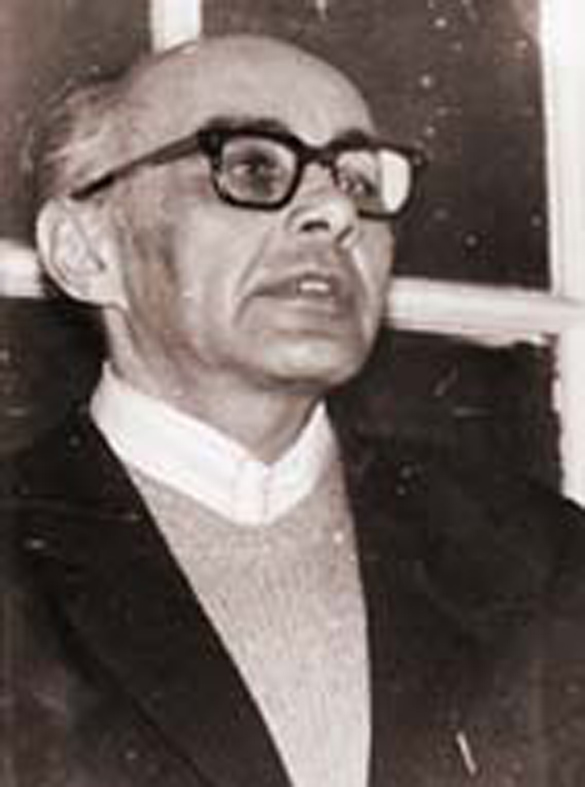
Vladislav Nikolaevich Korshunov (1929-2021), 1952 graduate, is most known for his works in electrochemistry of amalgam systems. He started from amalgams decomposition (PhD thesis in 1962), and continued with the structure and thermodynamics of a wide variety of alkali-earth and rare-earth metal amalgams, as well as with kinetics of hydrogen evolution on the amalgams (DSc thesis in 1983, and a fundamental book published in 1990). He was active up to about 2010, and worked on kinetics of cations reduction on liquid and solid electrodes. Vladislav N. Korshunov was uniquely deep and surely underestimated expert in both interfacial electrochemistry and solution science. He inherited all the modesty and responsibility of his teacher Zinovyi A. Iofa.
Nadezhda Semenovna [Samuilovna] Polyanovskaya (Shapiro) (1929-2020), 1952 graduate, worked directly with A.N. Frumkin for many years, and later with B.B. Damaskin. Her electrocapillary data for various amalgams and some gallams (1966 PhD thesis and later) formed a basis for extension of total charge concept.
Lev Nikolaevich Nekrasov (1931-2010) graduated in 1953, and was involved in the studies which resulted in creation of rotating ring-disc electrode, RRDE (his 1961 PhD thesis, and 1972 DSc thesis). Being an active party member, he was allowed to visit USA in 1960s, and spent some time in E.B. Yeager’s lab (uniquely rare possibility for soviet scientists). He applied RRDE to various electrode reactions, in particular, to determination of intermediate species in organic reactions. This large series of works resulted from his cooperation with his wife Liliya Panteleimonovna Yur’eva (1930-2008), who was experienced organic chemist.
In 1956, Boris Borisovich Damaskin (1932-2019) joined the Deartment after graduation, initially as PhD student (the link goes to a separate page).
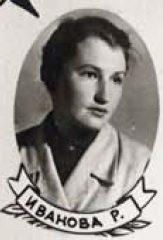
Rimma Vladimirovna Ivanova (1934-2021), 1958 graduate, first completed her diploma work on anions electroreduction on mercury with N.V. Fedorovich. Starting from her PhD period, and later being a member of Department staff, she worked with B.B. Damaskin and concentrated on ionic adsorption on mercury. In particular, she studied this phenomenon in non-aqueous solvents.
In 1959, Oleg Alexandrovich Petrii (1937-2021) started at the Dept, initially as PhD student (the link goes to a separate page).
Elena Vital’evna Stenina (nee Yakovleva) completed her diploma on the effect of cations on oxygen reduction under supervision of R.I. Kaganovich and A.N. Frumkin. Her PhD thesis on anions electroreduction (1967) was supervised by N.V. Fedorovich. In 1986, she defended DSc thesis on 2D condensation of organic molecules at the electrode/solution interface. One of manifestations of this unique phenomenon is the appearance of polarographic maximums of the third kind, she co-authored 7 articles with A.N. Frumkin on this topic.
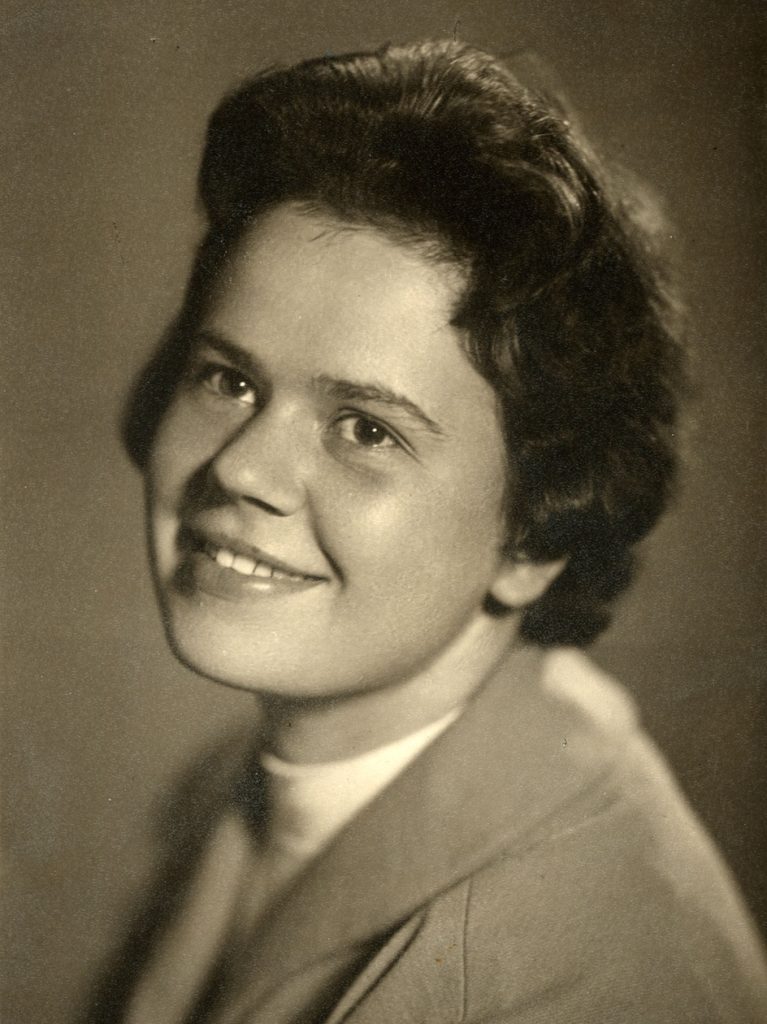
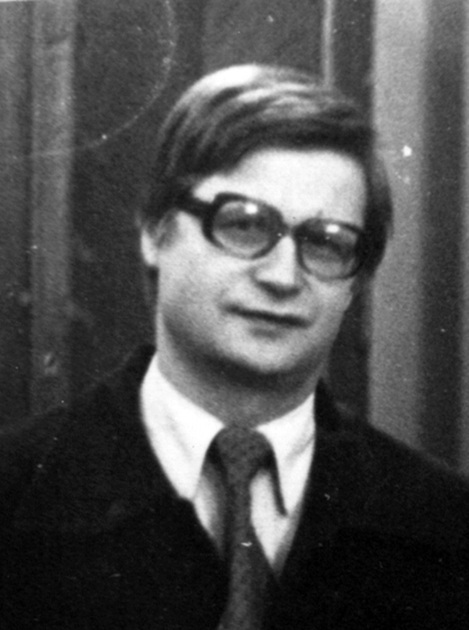
Boris Ivanovich Podlovchenko
Just this 1952-1961 generation of the graduates determined the research structure of the Dept for several decades: starting from 1970-1980s, the independent research groups were headed by V.N. Korshunov, L.N. Nekrasov, B.B. Damaskin, O.A. Petrii, and B.I. Podlovchenko. In parallel, the groups of Z.A. Iofa and N.V. Fedorovich were active for some period, and independent group of E.V. Stenina appeared in 1990s.
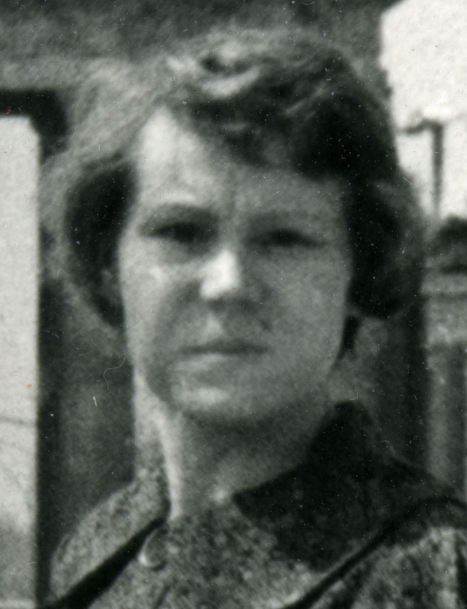
Anna Petrovna P’yankova, 1962 graduate, was diploma student of Z.A. Iofa. She studied electrode processes on iron, mostly in alkaline solutions, and was also involved in applied corrosion research (she had temporary position at the Dept, supported just from applied contracts). We do not know where she moved in 1980s.
Vera Moiseevna (Mikhailovna) Gerovich, 1962 graduate, is imaged near the tube of optical device used for precise determination of the position of mercury meniscus during electrocapillary measurements. This was her favorite type of measurements for the studies of organic molecules adsorption in diploma and PhD (1969) theses, and later. She was also dealing with comparative experiments on adsorption on solution/air interface, continuing the work of her father M.A. Gerovich. She was supervised by R.I. Kaganovich, A.N. Frumkin, and later worked with B.B. Damaskin. When Vera M. left for Israel in 1990s, she worked for some period as applied electrochemist.

Svetlana Yakovlevna Vas[s]ina (1941-2019), 1963 graduate, started with A.I. Fedorova … Then she moved to the group of O.A. Petrii, and became his close associate for many years. …
Tat’yana Mikhailovna Tarasova, 1965 graduate, worked with N.V. Fedorovich, and was appointed an assistant for organization of specialized laboratory works, and her duties assumed purification and preparation of all pure reagents, double-distilled water, etc. for students. It was enormous work, which she continued for more than decade. As for her research work, we even cannot ascertain the topic now, as nothing was ever published (this happened in Fedorovich’s group). Finally T.M. Tarasova left the Dept, and it was information about her untimely death later.
Svetlana Yur’evna Volosova (1941-2006), 1966 graduate, started from diploma work with A.I. Fedorova, and then continued with Z.A. Iofa (later in 1980s, with V.A. Safonov) dealing with corrosion-oriented studies. She was uniquely creative and friendly person, and played a special role in internal life of the Dept playing guitar and singing. In traditional local performance “Princess Turandot” (remake of Gozzi tale, first performed in 1983), she played Turandot inimitably.
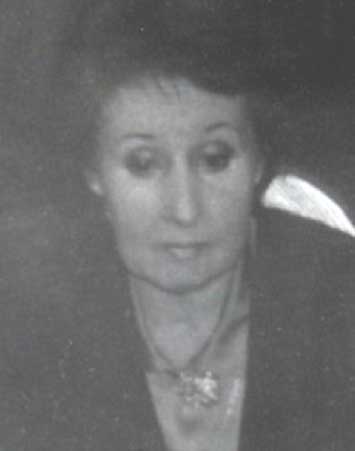
Elena Aleksandrovna Kolyadko (1946-2020), 1968 graduate, always worked with B.I. Podlovchenko. Her 1972 PhD thesis was related to hexan adsortion and oxidation on platinum. Later she worked on various effects of foreign adatoms (especially silver) in adsorption phenomena and electrocatalysis on platinum group metals. Her important works address the interplay of silver and oxygen adatoms (1987), CO2 reduction on palladium at positive RHE potentials (1994), separation of ad- and absorbed hydrogen on/by palladium (1995). During last years before retirement she also worked with polyaniline-based systems.
Viktor Alekseyevich Safonov, 1969 graduate, was a student of O.A. Petrii, dealing with the impedance of platinum electrode (1973 PhD thesis). He started corrosion research soon (when Z.A. Iofa was retired), and also worked with O.A. Petrii on platinum metals “double layer” in aprotic media. His 1991 DSc thesis adressed chemosorption on metals in organic solvents. Later he started (with Maria A. Choba) capacitance measurements on mechanically renewable electrodes. He also had joined studies of chromium electrodeposition with Polukarov’s lab in the Institute of Physical Chemistry, and participated in some model works of B.B. Damaskin.
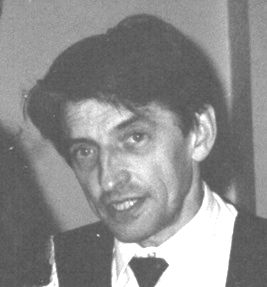
Yuriy Mikhailovich Maksimov, 1970 graduate, stared from ionization of molecular hydrogen with O.A. Petrii (1975 PhD thesis). After PhD, he coninued with B.I. Podlovchenko, dealing with a wide variety of topics (mostly belonging to electrocatalysis). His experimental talents, including electrotechnical, always played an important role in organization of various measurements at the Dept.
Lyudmila Nikolaevna Vykhodtseva, 1970 graduate, worked with L.N. Nekrasov for a long time. Her 1979 PhD thesis addressed the reduction of aldehydes and ketones on various solid electrodes, and then she continued with other organic reactants using the same rotating ring-disc electrode technique. Starting from 2000s, she moved to the group of V.A. Safonov, and studied various aspects of chromium deposition.
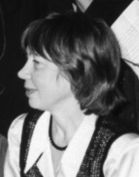
Galina Nesterovna Botukhova (1946-2020), 1971 graduate
Rimma Petrovna Petukhova (1940-2001), 1971 graduate
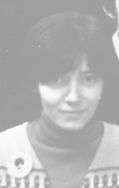
Tat’yana Yakovlevna Safonova (nee Kolotyrkina), 1971 graduate
Liana Nikolaevna Sviridova (nee Borisova), 1971 graduate
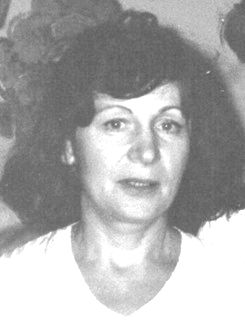
Tat’yana Georgievna Stepina (nee Krasnoshchekova), 1972
Galina Aleksandrovna Tsirlina, 1981 graduate, completed diploma and PhD (1985) theses with O.A. Petrii, and spent 4 years in Frumkin Inst. After her return to the Dept in 1989, she was dealing with oxides electrocrystallization (1996 DSc thesis), experimental verification of electron transfer theory, and various material science/electrocatalysis oriented topics. She teached electrochemistry general and specialized courses after her forced escape from Russia in 2022.
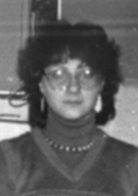
Marina Igorevna Borzenko (nee Podgornaya), 1983 graduate, spent a long time in the group of N.V. Fedorovich, studying anions reduction complicated by protonation. Then she completed PhD thesis on the central ion reduction in heteropoly oxoanions (1999) with G.A. Tsirlina, and continued later with polyoxometalates related topics. Her huge administrative and organizational work as a deputy head of the Dept responsible for teaching came in the period of numerous educational reforms and bureaucratic transformations, and cannot be overestimated.
Local graduates always dominated in Dept staff, but some people from the outside appeared from time to time. These people are listed below alphabetically.
Lyubov’ Nikolaevna Balashova served as the Dept hostess responsible for all “estate”,. including equipment, furniture, reagents, protection clothing, cleaning of premises, etc. She also took care of good mood of all the members of Dept, being able to find kind words and to provide useful advice for everybody. Her working place was located directly in Frumkin’s (later Damaskin’s) office. She was a soul of the Dept during several decades.
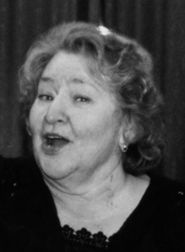
Nina Nikolaevna Balashova served as Dept engineer, first belonging to the group of V.N. Korshunov. She was responsible for mercury purification, which remained very important for all the Dept for decades. This procedure was arranged in a separate small building in the yard of the Chemical Faculty, and the most importans step was double vacuum distillation. After retirement of L.N. Balashova, Nina accepted her numerous duties.
Maria Alekseyevna Choba (nee Nikitina) worked initially as the technician, and combined it with evening chemical-technological education. Then she became a researcher, and completed her PhD thesis on electrochemical behavior of renewable Pb-Sn alloys in 1993 under supervision of V.A. Safonov. She continued with other systems and the same type of measurements, and also participated in some corrosion works of Safonov.
Sofia Leibovna Dyatkina worked with B.B. Damaskin up to her retirement. Her PhD thesis was completed in 1969 and presented the comparison of aromatic molecules adsorption at air/solution and mercury/solution interfaces. She left for USA with her family in late 1990s.
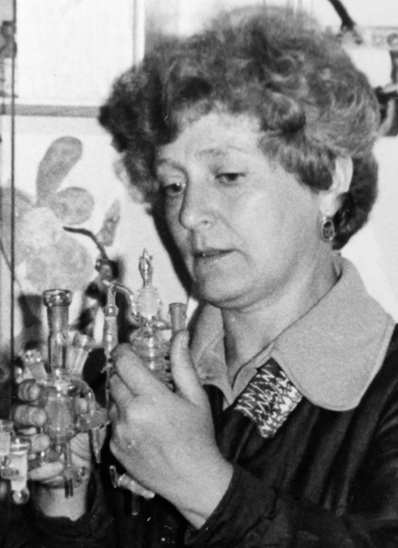
Tatiana Dmitrievna Gladysheva arrived from Alma-Ata (Kazakhstan), where she completed her PhD thesis on Pd-promoted skeleton nickel catalysts. At mid 1970s she started to work with B.I. Podlovchenko, her major direction was the study of porous electrocatalysts and their sintering. She also made a lot for electrocatalysis as is, in particular with application of analytical techniques to determine reaction products.

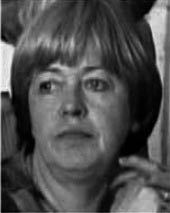
Tatiana Nikolaevna Khomchenko (nee Zakharova) graduated from another Dept of the Chemical faculty in 1972, and was later accepted as Dept of Electrochemistry member. Working with L.N. Nekrasov, she completed her PhD on statistical characteristics of the turbulent diffusion layer in the context of electrode kinetics in 1991 (the topic was inspired by the works of S.A. Martemianov).
Zoya Viktorovna Kuz’minova
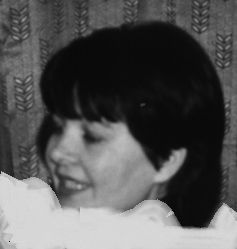
Emma Ivanovna Mikhailova (1926-2015) completed her PhD under supervision of Z.A. Iofa. They studied the behavior of nickel in acidic media, as affected by organic surfactants. Then she continued in the group of N.V. Fedorovich up to retirement.
Ninel’ Izidorovna Palagina (Mazur) served as senior technician in the group of B.B. Damaskin, and was very important person
Mikhail Ivanovich Revushkin was glass-blower of unique qualification. He not only fabricated, but typically designed glass cells for electrochemical measurements. When spome cell was broken (a usual situation, especially for newcomers), he repaired it with the comments like “If one is not breaking <the cells>, this means that this person is not working” (“Кто не бъет <ячейки>, тот не работает”).
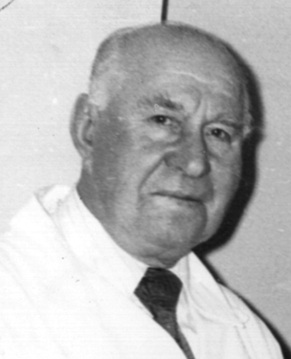
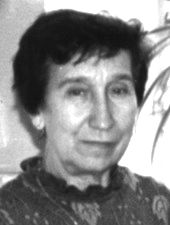
Galina Fedorovna Zdorova (1932-2023) was glass-blwoer, also very experienced and learning professional secrets from M.I. Revushkin. Her responsibility was mostly repair of the glass staff, which sometimes required standing with the torch on the chair or ladder to reach the equipment located close to ceiling. She also took care of all the houseplants at the Dept.
A number of photos presented below illustrate the life of Sept during late Frumkin period and shortly after it.
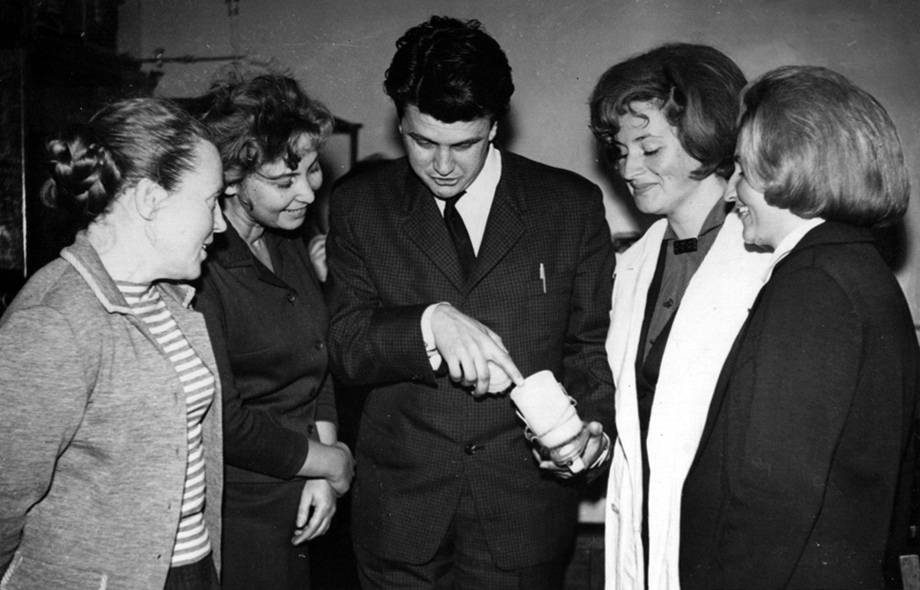
Boris B. Damaskin surrounded by electrochemical ladies: (from left to right) Nina V. Fedorovich, Nadezhda S. Polyanovskaya, Ninel’ I. Palagina, and Rimma V. Ivanova.
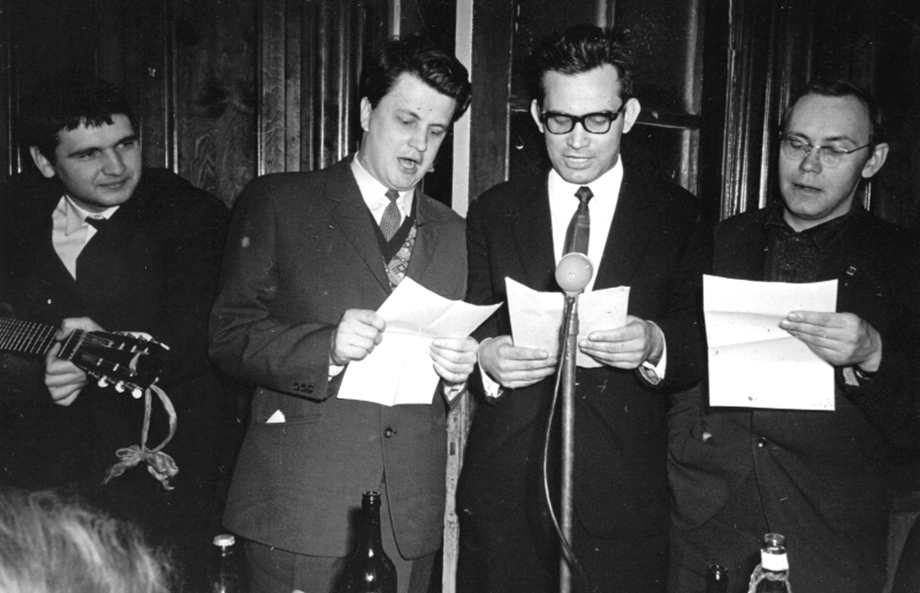
From left to right: Arvidas Survila, Boris B. Damaskin, Oleg A. Petrii, Valeryi V. Batrakov, singing. This is the whole vocal team named “Psi-prime boys” (named after psi-prime potential, the parameter of Frumkin’s theory of ‘double layer’ effects on electrode kinetics).
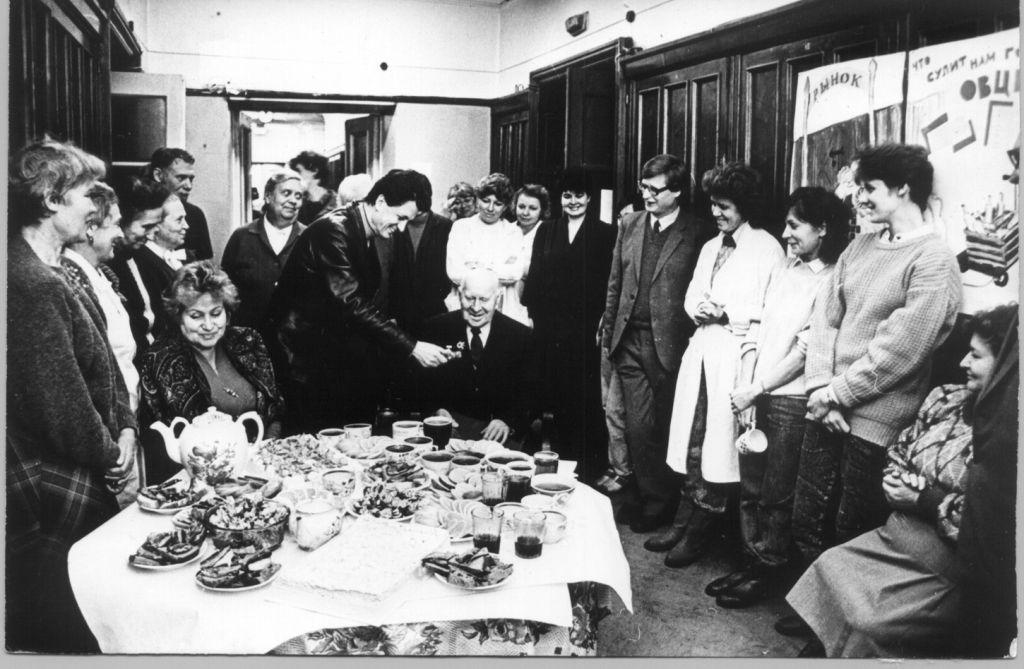
Typical event at the Dept, arranged in a wide corridor. This photo shows celebration of the jubilee of M.I. Revushkin, famous glass-blower (sitting near the table). B.B. Damaskin presents him a gift. Lady sitting at the right is L.N. Balashova, and lady sitting near the table is N.I. Palagina, both are usual mistresses organizing the food for event. This corridor could accommodate several dozens of people, who all could even seat if additional tables and chairs were collected from all the Dept.