Very large industrial city Rostov-on-Don is located at the lower reaches of Don river, not far from the Sea of Azov. Nearby town (at ca. 40 km distance) is Novocherkassk. Both are known as the centres of Cossacks (specific military class in Russian Empire, which is now transformed into nationalistic and warlike communities). Despite of this trouble, both places have a noticeable scientific history. Surprizingly, this they owe to Warsaw, which belonged to the same Empire for a long time.

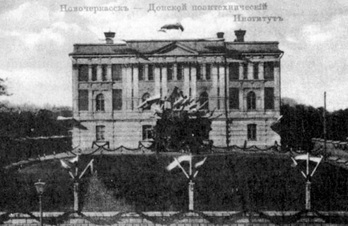
Novocherkassk Polytechnical Institute was founded in 1907, after closing of Warsaw Polytechnical Institute because of students protests, and transfer of the Institute staff to Russia. The institute hosts one of the eldest (1932?) departments of electrochemical engineering in USSR and Russia. In 1948-1960, this Dept was headed by Lev Ivanovich Antropov (1913-1994), who later left for Kiev.
Rostov-on-Don <currently South Federal> University was started in 1915, when the Imperial Warsaw University (which was Russian speaking University in Warsaw) was temporary evacuated from Poland because of WWI. It became a permanent University in 1917. In 1976, Dept of electrochemistry was established in this University (the third specialized Dept, in addition to Moscow and StPetersburg).
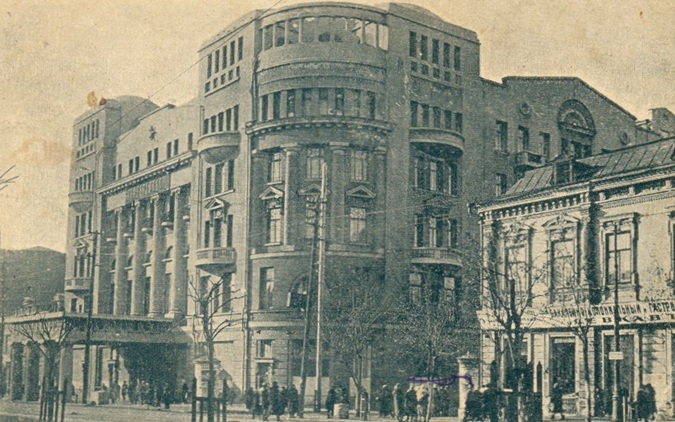
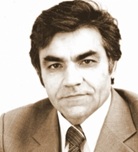
Fedor Ivanovich Kukoz (1924-2010) served voluntarily in the army in 1942-1945, being at WWII front. Then, after graduation from physics and math faculty of Rostov University, he worked in Novocherkassk Polytechnocal Institute. In 1970-1990, he headed Antropov’s Dept <during intermediate decade 1960-1970, it was headed by Mikhail Fedorovich Skalozybov (1899-1970), who worked on the technical aspects of active layers of batteries>. Kukoz is known for his studies of acoustic and magnetic effects on the processes of applied electrochemistry (1959 PhD thesis and 1967 DSc thesis). His contribution to electrical corrosion protection was also essential.
Vladimir Aleksandrovich Smirnov (1928-1991) spent a major part of his life in Novocherkassk Polytechnical Institute, starting from his student period (1950 graduate). After a year of work in industry, he started his research of organic molecules reduction on amalgam electrodes (1953 PhD thesis and 1966 DSc thesis), and continued with wider number of organic and inorganic electrochemical technologies. His wife Margarita Grigor’evna Smirnova (1928-2000) also worked in this direction. They had very close cooperation with Mikhail Yakovlevich Fioshin (1927-1985). This was independent branch in the institute, formally linked to non-electrochemical Depts.
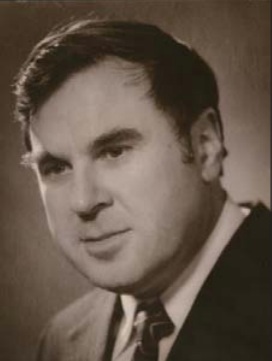
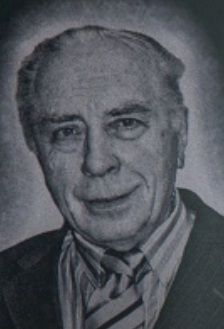
Valentin Petrovich Grigoriev (1931-2020) graduated from Rostov University in 1954, and became PhD student in Novocherkassk. From 1963, he continued in Rostov, His 1958 PhD thesis and 1970 DSc thesis were devoted to his basic research direction, corrosion inhibitors. He was a founder and the first head of specialized Dept of electrochemistry.
Use of electrocapillarity measurements to determine the effect of surface active substances under passivation conditions // Protection of Metals. 1965 V. 1. P. 386-389. Russian version: Zashchita Metallov. 1965. V. 1. P. 436-439.