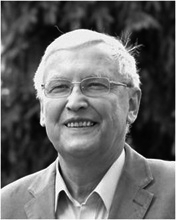
Small scientific town Chernogolovka (Черноголовка) in the Moscow region was started in 1956 at completely empty place inside the forest, as the polygon division of Semenov’s Institute of Chemical Physics for the studies of combustion and explosion processes. This division developed to a huge Institute of the Problems of Chemical Physics, and other institutes appeared soon, including a famous Landau Institute of Theoretical Physics. This town was very helpful for scientists having no permanent registration in Moscow or StPetersburg, or meeting other employment problems in large cities. This was, in particular, the reason of appearance of Ukshe’s and Benderskyi’s electrochemical branches in Chernogolovka.
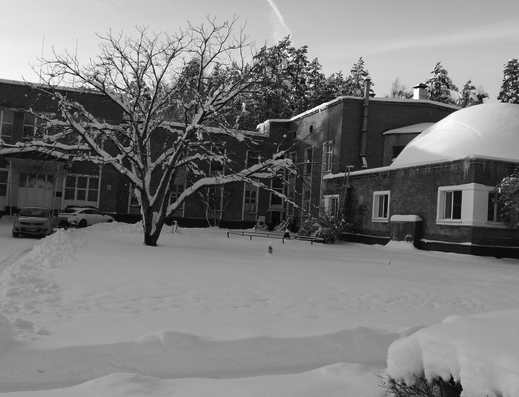
Evgenyi Aleksandrovich Ukshe (1928-1993) originated from Ural electrochemical school. His 1953 PhD thesis addressed copper deposition from complex electrolytes. He worked in Berezniki (Березники, industrial town at Ural region) starting from 1956, being affiliated with local division of Aluminum-Magnesium applied Institute (ВАМИ) and dealing with physical chemistry and electrochemistry of melts (1964 DSc thesis). This included metals dissolution in halcogenide melts and the capacitance of molten salt/solution interfaces (jointly with D.I. Leikis). Finally, with active support from A.N. Frumkin, he managed to move closer to Moscow in 1964, and headed a lab in the Institute of New Chemical Problems in Chernogolovka. Here, he and his team switched to the studies of electrochemical systems with solid electrolytes.
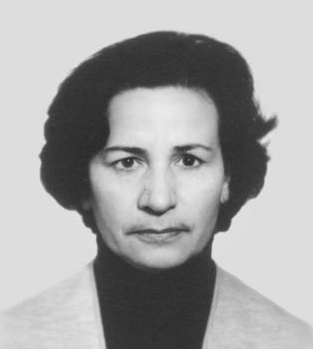
Nadezhda Gerasimovna Bukun (b. 1931), the closest coauthor of E.A. Ukshe, and later the unique keeper of his scientific memory, graduated from Rostov-on-Don University and then worked in Berezniki. Her 1963 PhD thesis on electric double layer in electrode/molten salt systems was completed in collaboration with D.I. Leikis. From 1964 to 1967, she continued in Frumkin Institute, developing (jointly with E.A. Ukshe) the impedance measurements in melts. Then she moved to in the Institute of New Chemical Problems (later accepted by much larger neighbor Institute of the Problems of Chemical Physics). Her 1990 DSc thesis is devoted to impedance studies of solid electrolytes.
This brief presentation shows evolution of Ukshe-Bukun early research topics.
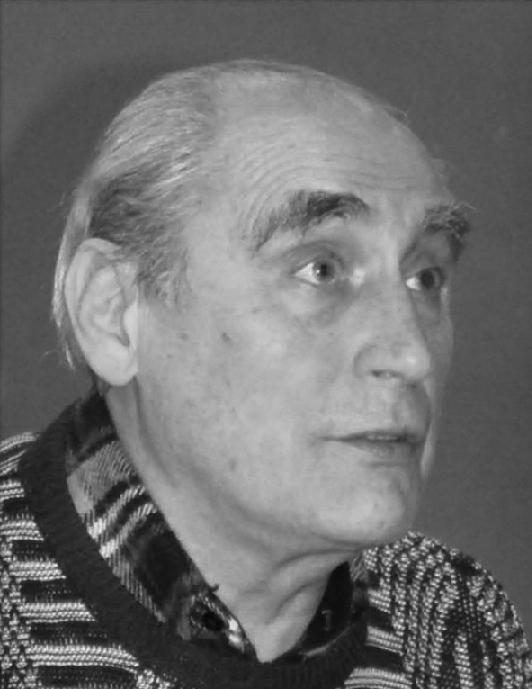
Viktor Adol’fovich Benderskyi (1937-2022), graduate of the Chemical Faculty of Moscow University (1960), developed as a physicist starting already from his diploma work on microwave spectroscopy. After graduation, he joined a group of the outstanding biophysicist Lev Aleksandrovich Blumenfeld (2021-2002) in the Institute of Chemical Physics (ИХФ), and moved to its division in Chernogolovka soon. He is known in various fields, including magnetic and electric properties of biopolymers (PhD thesis, 1964) and photoelectric phenomena in molecular crystals and solutions (Nature 220 (1968) 365-367, DSc thesis, 1972). In respect to electrochemistry, his great contributions are related to photoemission of electrons and to laser jump technique to study electrode/solution interface. We present below some representative articles from rarely available sources. The majority of photoemission results were published abroad in late 1970s-1980s, mostly in J. Electroanal. Chem.
Tatevskyi V.M., Benderskyi V.A. New regularities in physicochemical properties of hydrocarbons. II // J. Gen. Chem. USSR. 1958. V. 28. P. 1781-1785. This is a student work under supervision of V.M. Tatevskyi, rather trivial, but most probably this was a complex route from chemistry to molecular spectroscopy.
Blumenfeld L.A., Benderskyi V.A. The conditions for charge transfer in organic systems // Doklady Physical Chemistry. 1962. V. 144. P. 419-422. Russian version: Doklady Akademii Nauk SSSR. 1962. V. 144. P. 813-816.
Babenko S.D., Benderskyi V.A., Krivenko A.G. Measurement of the diffusion coefficients of ОН and OD radicals and of H and D atoms in aqueous electrolyte solutions // Doklady Physical Chemistry. 1976. V. 231. P. 1227-1229. Russian version: Doklady Akademii Nauk SSSR. 1976. V. 231. P. 907-910.
Babenko S.D., Benderskyi V.A., Krivenko A.G., Ovchinnikov A.A. Direct measurement of the rate constants and reaction mechanism of the electrochemical desorption of hydrogen on mercury // Doklady Physical Chemistry. 1977. V. 235. P. 741-744. Russian version: Doklady Akademii Nauk SSSR. 1977. V. 235. P. 835-838.
Aleksandr Georgievich Krivenko (b. 1948) graduated from the Faculty of Physics of the Rostov-on-Don University, and became an active participant of Benderskyi’s photoemission studies. His 1980 PhD thesis addressed application of this phenomenon to the studies of intermediate species of complex electrode reactions, and later he continued with this topic, mostly for organic reactions (DSc thesis in 2003). He headed laser electrochemistry lab in the Institute of the Problems of Chemical Physics for many years, and initiated the studies of electrons injection from carbon nanotubes and relative materials.